UK Recalls Children's Play Sand After Asbestos Found
Hobbycraft withdraws colored craft sand from UK stores after a parent's lab test confirmed tremolite asbestos in three colors. Government urges formal recall.

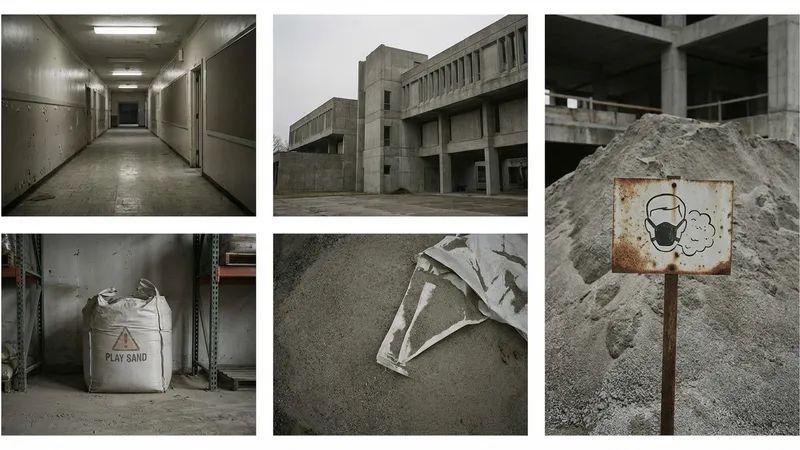
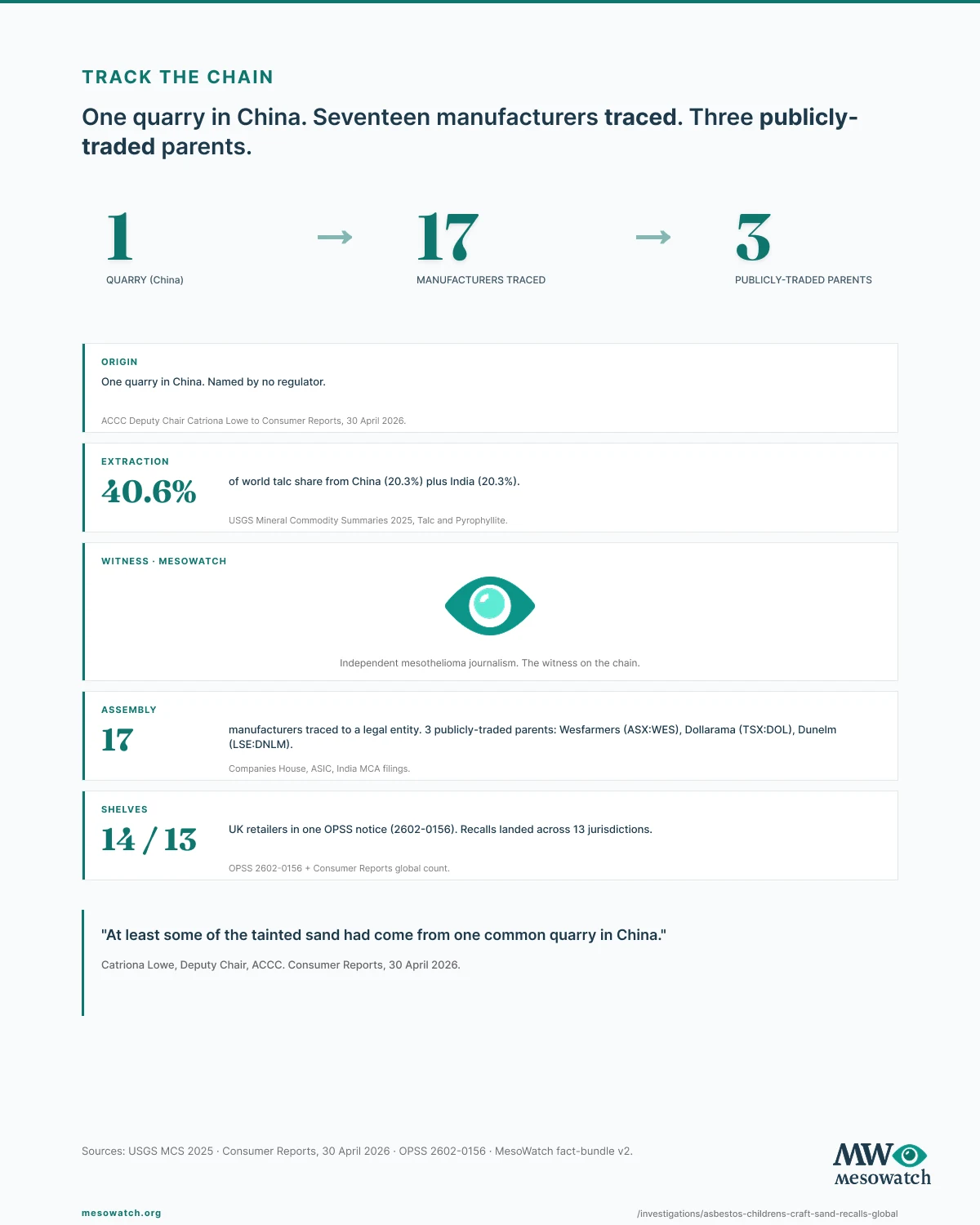
Hobbycraft has withdrawn children’s colored play sand from its UK stores after independent laboratory testing confirmed the presence of asbestos fibers. The discovery follows a similar crisis in Australia, where contaminated play sand forced 69 schools to close in late 2025. The Hobbycraft finding is the first UK signal in what has since grown into a 12-country recall pattern documented in our cornerstone investigation tracing the supply chain to a single Chinese quarry.
What Was Found
A concerned UK parent, aware of the Australian play sand recalls, purchased a craft kit from Hobbycraft and sent samples to an accredited laboratory for testing. Three of the five colored sand samples. Yellow, green, and pink. Tested positive for fibrous tremolite asbestos.
The contaminated sand was sold as part of Hobbycraft’s “Giant Box of Crafts” kit, a popular children’s activity set.
Tremolite Asbestos
Tremolite is an amphibole form of asbestos considered more dangerous than chrysotile (white asbestos). Like all asbestos types, tremolite fibers can cause:
There is no safe level of asbestos exposure, though risk increases with dose and duration.
Government Response
UK government officials are pressing Hobbycraft to issue a formal product recall rather than simply withdrawing the items from shelves.
“Parents are right to be concerned by this,” a government source told reporters. “Officials are investigating, but there’s no good reason why Hobbycraft shouldn’t recall this themselves, given the evidence.”
Hobbycraft has stated it is investigating the matter but has not yet issued an official recall that would notify customers who already purchased the product.
Parents who purchased Hobbycraft craft kits containing colored sand should stop using them immediately. Keep the sand contained and contact Hobbycraft for return instructions. Do not attempt to dispose of potentially contaminated materials in household trash.
Health Risk Assessment
The British Occupational Hygiene Society (BOHS) and the Faculty of Asbestos Assessment and Management (FAAM) have weighed in on the risk level:
| Factor | Assessment |
|---|---|
| Fiber release during normal use | Low (sand is not easily aerosolized) |
| Risk if sand is crushed or ground | Higher (mechanical action releases fibers) |
| Overall exposure risk | Low but not zero |
According to the National Asbestos Exposure Register, while the prospective risk for a person exposed would be extremely low, there is no safe threshold for asbestos exposure.
Part of a Global Pattern
The UK discovery follows a larger international crisis involving contaminated play sand products:
Australia and New Zealand (2025)
- 69 schools closed after asbestos found in colored play sand
- National recall issued for multiple brands
- Products traced to imported supplies
UK Investigation (2026)
- Parent-initiated testing reveals contamination
- Same type of product affected (colored craft sand)
- Suggests common supply chain issues
Both the Australian and UK contaminations appear to involve imported colored sand products, raising questions about quality controls in the international supply chain for children’s craft materials.
What Parents Should Do
Immediate Steps
- Stop using any colored craft sand products
- Do not shake or pour the sand, which could release fibers
- Keep containers sealed until you can safely dispose of them
- Contact the retailer for return/refund information
- Monitor for recalls from official sources
If Children Were Exposed
The exposure risk from brief contact with contaminated sand is considered very low. However, if you have concerns:
- Note the product details and approximate dates of use
- Mention the exposure to your child’s pediatrician at their next visit
- There is no need for emergency medical attention for brief, past exposure
Regulatory Gap
Unlike Australia, which has robust asbestos testing requirements for imported goods, the UK lacks mandatory pre-market testing for asbestos in consumer products. This incident has renewed calls for stronger import controls.
The European Union recently declined to follow the WHO’s classification of talc as “probably carcinogenic,” highlighting ongoing regulatory disagreements about mineral contamination standards.
See Also
The Hobbycraft finding opened the British chapter of what has since grown into a 12-country pattern. For the broader UK recall list with 21-plus products and OPSS reference numbers, see UK Recalls 21+ Toys Over Asbestos in Sand Products. For the running global tally with country-by-country counts and the supply-chain trace to a single Chinese quarry, see the cornerstone investigation behind the 80-plus recalls in 12 countries.
Reader Q&A
Frequently Asked Questions
What type of asbestos was found in the play sand?
Laboratory testing confirmed fibrous tremolite asbestos in three colors (yellow, green, and pink) of the sand sold in Hobbycraft craft kits. Tremolite is an amphibole asbestos, considered more hazardous than chrysotile.
How dangerous is brief exposure to this sand?
Health experts say the risk from brief exposure is very low. Asbestos fibers are unlikely to become airborne from sand in its normal state unless it is mechanically crushed or ground. However, there is no completely safe level of asbestos exposure.
Has Hobbycraft issued a recall?
As of January 24, 2026, Hobbycraft has withdrawn the products from sale but has not issued a formal recall. UK government officials are urging the company to notify customers who already purchased the affected products.
What year did asbestos stop being used in the UK?
The UK banned the import, supply, and use of blue (crocidolite) and brown (amosite) asbestos in 1985, effective January 1, 1986. White (chrysotile) asbestos, which remained in active use into the late 1990s, was included in a full ban on all types of asbestos in November 1999 via the Asbestos (Prohibitions) (Amendment) Regulations 1999, making it illegal to buy, sell, import, or export asbestos-containing materials. Buildings constructed before 2000 may still contain asbestos from prior use. Some pre-ban products like gaskets were reportedly installed after 2000 from existing stocks. Exposure to asbestos is a known risk factor for mesothelioma in people with occupational or environmental histories.
What famous person died from mesothelioma?
Steve McQueen, a prominent actor known for films like The Great Escape and The Magnificent Seven, died from pleural mesothelioma in 1980 at age 50. His exposure is linked to U.S. Marine service, shipyard work, and possible movie set insulation. Other celebrities who died from mesothelioma include musician Warren Zevon (2003), actor Ed Lauter (2013), and NFL player Merlin Olsen. Paleontologist Stephen Jay Gould survived peritoneal mesothelioma for 20 years before dying from unrelated lung cancer in 2002.
What happens if a child is exposed to asbestos?
Asbestos exposure in children can lead to serious health problems, though symptoms typically do not appear until adulthood, sometimes 40 to 50 years after exposure. Children are at higher risk than adults because their lungs are smaller, have greater surface area relative to volume, and they breathe faster, inhaling more asbestos fibers with each breath. Potential asbestos-related diseases include mesothelioma, lung cancer, and asbestosis, which can cause persistent cough, chest pain, shortness of breath, and unexplained weight loss. Children may be exposed through secondary exposure (fibers carried home on a parent’s clothing), environmental exposure in schools or homes, contaminated drinking water, or ingestion of asbestos-contaminated soil and dust. While research on childhood asbestos exposure remains limited, some studies suggest that people exposed as children may face higher mesothelioma risk than those exposed later in life, though findings are not conclusive.
Will there ever be a cure for asbestosis?
No cure exists for asbestosis, a permanent lung scarring condition caused by asbestos exposure, and current treatments focus on symptom relief through options like oxygen therapy, pulmonary rehabilitation, and medications such as corticosteroids. Clinical trials are testing drugs like pirfenidone, originally for idiopathic pulmonary fibrosis, to assess potential benefits for people with asbestosis, but no biologics or immunotherapies are under active investigation. While research continues, evidence shows no reversal of lung damage is possible, and future cures remain unproven.