Todd Galveston Operated 1934 to 1990. Brown Shipbuilding Built WWII Destroyer Escorts. The Galveston Bay Asbestos Cohort.
Galveston, Texas City, Pelican Island, Orange. The Cold War-era shipyards and refineries that completed the Texas Gulf Coast asbestos triangle.

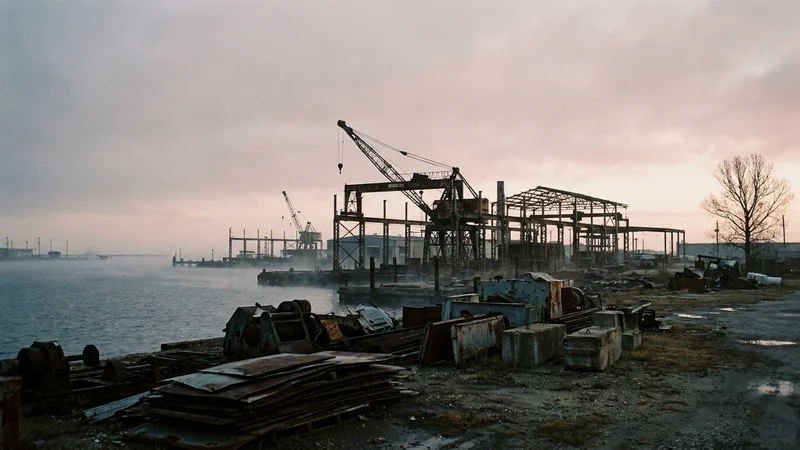
The Galveston Bay industrial belt completes the Texas Gulf Coast asbestos triangle. To the north, the Houston Ship Channel exposure sites run 52 miles from the Port of Houston to Galveston Bay. To the east, the Beaumont-Port Arthur refinery corridor anchors the largest US refinery by capacity. In between, the Galveston Bay shoreline holds Pelican Island, the city of Galveston, Texas City with the Marathon Petroleum Galveston Bay Refinery, and the smaller shipyards and industrial sites that worked the Gulf for most of the 20th century.
Todd Shipyards Galveston operated on Pelican Island from 1934 through closure in 1990. Brown Shipbuilding Company in Houston built destroyer escorts and patrol craft during World War II. Levingston Shipbuilding operated in Orange, Texas as a major Gulf Coast offshore drilling platform builder. The BP Texas City Refinery explosion on March 23, 2005 killed 15 workers and injured more than 170, drawing federal attention to refinery safety. The refinery was sold to Marathon Petroleum in 2013 and operates today as Marathon Petroleum Galveston Bay Refinery. The asbestos exposure history of the belt traces from the WWII shipbuilding boom through the Cold War expansion of refining and offshore drilling.
Todd Shipyards Galveston, 1934 to 1990
Todd Shipyards’ Galveston operation began in 1934 when Todd acquired Galveston Dry Dock and Construction Company. The Pelican Island yard sat on the protected back side of Galveston, across the channel from the city. Pelican Island provided dry dock access for ship repair and maintenance work, with the rail and barge connections to support yard operations.
World War II reshaped the yard. In 1943, the US Maritime Commission directed Todd to take over Gray’s Iron Works (a new 1941 yard with four berths), combining operations as Todd Galveston Drydocks Inc. The wartime focus was ship repair, with some new construction. After WWII, Todd built three additional vessels but shifted primarily to repair-only operations by 1949, renaming the operation Todd Shipyards Corporation Galveston Division (commonly called Todd Galveston). In the mid-1960s the yard expanded into ship conversions and tank barge work, acquiring a fabrication shop on Texas Clipper Road. The Cold War-era work included offshore support vessel maintenance, conversions for the Gulf petroleum industry, and ongoing ship repair.
Todd closed the Galveston yard in 1990 amid the Todd Shipyards Corporation Chapter 11 bankruptcy. The yard’s drydocks were sold to Alabama Shipyard and Bender Shipbuilding. The fabrication shop went to Southwest Shipyard. In 1993, the Pelican Island site was sold to the Port of Galveston and leased to Newpark Marine, now operating as Gulf Copper Offshore Repair Yard. The continuous operation of Pelican Island shipyard work from 1934 to today (under successive owners) means the asbestos exposure history extends across multiple ownership eras.
The shipyard worker cohort at Todd Galveston included shipfitters, pipefitters, boilermakers, electricians, welders, painters, sandblasters, riggers, machinists, and laborers. Vessel repair work on tankers, freighters, and offshore vessels involved opening insulated piping, removing and replacing boiler insulation, and grinding fireproofing materials, all activities that disturbed intact asbestos-containing materials and generated airborne fibers.
Brown Shipbuilding and the Houston Ship Channel WWII Cohort
Brown Shipbuilding Company operated in Houston during World War II as part of the rapid wartime shipbuilding program. The Brown family (which later founded Brown and Root) built the yard on the Houston Ship Channel and produced destroyer escorts and patrol craft for the US Navy. The wartime work generated employment for thousands of Houston-area workers, many of whom continued in shipyard, refinery, or petrochemical work after the war.
The destroyer escort program built 563 vessels nationally during WWII (per Destroyer History Foundation aggregation of US Navy class records), primarily for mid-ocean convoy escort duty including the Battle of the Atlantic. Asbestos use in destroyer escort construction was standard, with thermal pipe insulation throughout machinery spaces, boiler lagging, gaskets, fireproofing on bulkheads, and equipment insulation. The pre-1980 Navy specification for shipboard insulation routinely called for asbestos-containing materials, and the Navy veterans cohort of US shipyard workers documents elevated mesothelioma risk consistent with this exposure history.
Brown Shipbuilding’s wartime workforce in Houston was occupationally exposed during the construction phase. Servicemembers who served on the destroyer escorts had ongoing exposure during routine maintenance work over the vessels’ service lives. The combined Houston shipyard and refinery cohort drove the elevated mesothelioma death count documented in the Houston Ship Channel exposure sites investigation, with Harris County recording 524 mesothelioma deaths from 1979 to 2002 per CDC WONDER mortality data, the highest single-county count in Texas.
Levingston Shipbuilding and Orange, Texas
Levingston Shipbuilding Company operated in Orange, Texas as a major Gulf Coast builder of offshore drilling platforms, ships, and barges. The yard sat at the eastern edge of Texas on the Sabine River near the Beaumont-Port Arthur petrochemical corridor. Levingston’s history traces to the early 20th century with sustained operations through the offshore drilling boom of the 1960s and 1970s. The yard built jack-up rigs, semi-submersible drilling units, and offshore support vessels for the Gulf of Mexico petroleum industry.
The asbestos exposure history at Levingston followed the standard shipyard pattern: thermal pipe insulation, boiler lagging, gaskets, fireproofing, and equipment insulation throughout the vessels and platforms built. The offshore drilling unit construction era through the 1970s used asbestos materials extensively before the OSHA general industry standard (29 CFR 1910.1001 effective 1972) and the OSHA shipyard employment standard (29 CFR 1915) reduced the use of new asbestos in maritime construction. Workers who built or worked on offshore drilling platforms have the same occupational exposure profile as conventional shipyard workers.
The Orange, Texas geography puts Levingston at the eastern apex of the Texas Gulf Coast asbestos triangle, near the Jefferson and Orange County corridor where CDC WONDER recorded approximately 278 asbestos-related deaths from 1979 to 2002 per the Beaumont-Port Arthur refinery corridor investigation. Workers commonly moved between facilities across the corridors over their careers, so a single mesothelioma case may have exposure history at Levingston, the Beaumont refineries, and the Port Arthur refineries.
Texas City Refining and the 2005 BP Explosion
Texas City sits on the southwest shore of Galveston Bay and has hosted major refining operations since the early 20th century. The BP Texas City Refinery (originally an Amoco facility built in 1934) was the third-largest US refinery at the time of the March 23, 2005 explosion that killed 15 workers and injured more than 170. The US Chemical Safety Board investigation documented systemic safety failures at the facility, including organizational culture problems, deferred maintenance, and inadequate hazard analysis on the isomerization unit where the explosion occurred. The CSB investigation drew federal attention to refinery safety practices nationally.
BP sold the refinery to Marathon Petroleum in 2013. The facility now operates as Marathon Petroleum Galveston Bay Refinery, one of the largest refineries on the US Gulf Coast. The refinery’s pre-1980 construction era and ongoing operation mean legacy asbestos-containing materials remain part of the operational facility, with abatement proceeding as units undergo turnaround maintenance. The asbestos exposure history at Texas City refining traces from the original Amoco operations of the 1930s and 1940s through the ongoing operation under Marathon today.
The Texas City industrial belt also includes the historic Texas City Disaster of April 16, 1947, when the SS Grandcamp ammonium nitrate cargo explosion killed at least 576 people (with only 398 identified) and injured approximately 4,000, per the Texas State Historical Association Handbook of Texas and Rice University Digital Collections. The disaster destroyed major portions of the Texas City waterfront and triggered subsequent reconstruction. The reconstructed industrial infrastructure used asbestos-containing materials extensively, consistent with mid-20th century standard practice.
The Asbestos Materials at Gulf Coast Shipyards and Refineries
Documented asbestos applications at Gulf Coast shipyards and refineries spanned multiple categories. Asbestos thermal system insulation (ATSI) covered miles of process piping in refineries and machinery space piping in vessels, separating hot fluids from ambient air for both energy efficiency and worker burn protection. Boiler lagging surrounded the vessel and shore-side boiler systems. Fireproofing was applied to structural support members and bulkheads to slow steel weakening in the event of a hydrocarbon fire. Gaskets between flanges and at valve seats sealed pressurized systems against leaks. Cement panels were used as bulkhead and deck panels in vessel construction and as exterior cladding and interior partitions in shore-side structures. Equipment insulation surrounded pumps, tanks, dryers, ovens, furnaces, reactors, and heat exchangers.
The OSHA general industry asbestos standard (29 CFR 1910.1001) was promulgated in 1971 and took effect in 1972, reducing the permissible exposure limit substantially. The OSHA shipyard employment standard (29 CFR 1915) addressed maritime work-specific exposure controls. EPA’s National Emission Standards for Hazardous Air Pollutants (NESHAP) added regulatory pressure beginning in 1973. But asbestos already in place in vessels and yard infrastructure remained a hazard for decades, particularly during repair, removal, and demolition work that disturbed intact ACM.
Insulators (laggers) had the highest documented direct exposure during installation, repair, and removal of pipe insulation and boiler lagging. Pipefitters and boilermakers had high exposure during work on insulated systems. Shipfitters and welders worked in close proximity to asbestos materials on bulkheads and structural steel. Electricians encountered asbestos in arc chutes, panels, and cable insulation. Laborers performing cleanup after insulation removal had significant bystander exposure. Sandblasters and painters working on hull surfaces encountered asbestos in primer coatings and fireproofing.
What People With Documented Exposure Should Know
People with documented exposure at Texas Gulf Coast shipyards or refineries who developed mesothelioma may be eligible to file claims with multiple asbestos trusts depending on which products were present at their specific worksite. Trusts with broad coverage for shipyard and refinery workers include the Owens Corning/Fibreboard trust (for Kaylo pipe insulation), the Combustion Engineering 524(g) trust, the Eagle-Picher Industries trust, the Babcock and Wilcox trust (for boiler work), the Armstrong World Industries trust, and others depending on the exposure history. The asbestos trust funds for Texas workers overview covers the major trusts relevant to Texas Gulf Coast occupational exposure.
Texas applies a 2-year statute of limitations for mesothelioma personal injury claims under the discovery rule (Texas Civil Practice and Remedies Code Section 16.003), starting from the date of diagnosis. Texas Civil Practice and Remedies Code Chapter 90 (Asbestos and Silica Claims), enacted in 2005, addresses claimant medical certification and exposure thresholds but does not alter the limitations period or the discovery rule. The Texas Supreme Court has confirmed the discovery rule’s application to latent asbestos diseases.
An exposure history document, sometimes called an occupational history, is required for trust claims. The document captures employer, dates of employment, work locations, job duties, and known asbestos product exposure. The document should be developed with an attorney who handles mesothelioma cases, as the trust filing requirements vary by trust and the litigation defendant identification is fact-specific. Family members exposed through take-home dust on a worker’s clothing have brought successful mesothelioma claims in Texas and elsewhere. The same Texas 2-year statute of limitations from diagnosis applies.
A Closing Thesis
The Galveston Bay industrial belt completes the Texas Gulf Coast asbestos triangle. Todd Shipyards Galveston (1934 to 1990), Brown Shipbuilding (WWII), Levingston Shipbuilding in Orange, and the Texas City refining sector together produced an occupational asbestos exposure cohort that continues to surface in mesothelioma diagnoses today. The combination of shipyard, refinery, and offshore drilling work created multi-site exposure histories for many Gulf Coast workers, with cases tracing exposure across Pelican Island, the Houston Ship Channel, Texas City, the Beaumont-Port Arthur corridor, and the Orange County yards.
The latency from initial asbestos fiber inhalation runs 20 to 50 years per ATSDR, so the workers exposed during the WWII through 1970s shipyard and refinery boom are now in the diagnosis window. The 2005 BP Texas City refinery explosion drew national attention to refinery safety, but the longer-term occupational health story at the facility (and its predecessors) traces to the asbestos materials installed during the 1934 to 1980 construction era. The industrial belt’s history is the underlying exposure map for the people now diagnosed with mesothelioma whose work histories trace through Galveston Bay, and the broader Texas mesothelioma statistical picture shows where that diagnosis pipeline is concentrated geographically.
Frequently Asked Questions
What shipyards operated in the Galveston Bay industrial belt?
Todd Shipyards Galveston operated on Pelican Island from 1934 (when Todd acquired Galveston Dry Dock and Construction Company) through closure in 1990 amid Chapter 11 bankruptcy. The yard expanded substantially during World War II, taking over Gray’s Iron Works in 1943 at the US Maritime Commission’s request and combining operations as Todd Galveston Drydocks Inc. After WWII the yard shifted primarily to ship repair, with mid-1960s expansion into ship conversions and tank barges. Brown Shipbuilding Company operated in Houston during WWII, building destroyer escorts and patrol craft. Levingston Shipbuilding Company operated in Orange, Texas as a major Gulf Coast builder of offshore drilling platforms and ships. Newpark Shipbuilding and other smaller yards also operated on Pelican Island and along the Galveston Bay shoreline.
What asbestos applications were used at Texas Gulf Coast shipyards?
Documented asbestos applications at Gulf Coast shipyards included thermal pipe insulation throughout vessel infrastructure, boiler lagging on ship boilers and shore-side boiler plants, fireproofing on structural steel and bulkheads, gaskets at piping and valve assemblies, cement panels for bulkhead and deck construction, and equipment insulation on pumps, tanks, dryers, and heat exchangers. Vessel construction through the 1970s used asbestos as the standard insulation material for hot piping, boilers, machinery spaces, and engine rooms. Vessel repair work during dry-docking disturbed intact asbestos-containing materials, generating airborne fibers in concentrated work areas.
Which shipyard jobs had the highest asbestos exposure?
Insulators, also known as laggers, had the highest documented direct exposure during installation, repair, and removal of pipe insulation and boiler lagging. Pipefitters and boilermakers had high exposure during work on insulated systems. Shipfitters and welders worked in close proximity to asbestos materials on bulkheads and structural steel. Electricians encountered asbestos in arc chutes, panels, and cable insulation. Laborers performing cleanup after insulation removal had significant bystander exposure. Sandblasters and painters working on hull surfaces encountered asbestos in primer coatings and fireproofing. Family members of shipyard workers in these trades were exposed to take-home asbestos dust on work clothing brought home and washed at home.
Did Texas City refinery work involve asbestos exposure?
Yes. Texas City has hosted major refining operations since the early 20th century. The BP Texas City Refinery (originally an Amoco facility built in 1934) was the third-largest US refinery at the time of the March 23, 2005 explosion that killed 15 workers and injured more than 170. BP sold the refinery to Marathon Petroleum in 2013, and it now operates as Marathon Petroleum Galveston Bay Refinery. Documented asbestos applications at Gulf Coast refineries included thermal pipe insulation on miles of process piping, boiler insulation, fireproofing on structural support members, gaskets at flanged joints, and equipment insulation. Refinery insulators had documented 8-hour TWA exposures of approximately 9 fibers per cubic centimeter at Gulf Coast refineries in the 1940s and 1950s.
How does the Galveston Bay belt fit with Houston and Beaumont?
The Galveston Bay industrial belt completes the Texas Gulf Coast asbestos triangle with the Houston Ship Channel to the north and the Beaumont-Port Arthur refinery corridor to the east. Together the three corridors anchored Texas heavy industry through the 20th century. The Houston Ship Channel runs roughly 52 miles from the Port of Houston to Galveston Bay. Galveston Bay opens to the Gulf at the south end of the Channel, with Pelican Island, Galveston, Texas City, and the Marathon Petroleum Galveston Bay Refinery on the bay shore. The Beaumont-Port Arthur corridor runs roughly 50 miles along the Sabine-Neches waterway northeast of Galveston Bay. Workers commonly moved between facilities across the corridors over their careers.
What can someone with documented exposure do?
Workers with documented exposure at Gulf Coast shipyards or refineries who developed mesothelioma may be eligible to file claims with multiple asbestos trusts depending on which products were present at their specific worksite. Trusts with broad coverage for shipyard and refinery workers include the Owens Corning/Fibreboard trust (for Kaylo pipe insulation), the Combustion Engineering 524(g) trust, the Eagle-Picher Industries trust, the Babcock and Wilcox trust, and the Armstrong World Industries trust. Texas applies a 2-year statute of limitations for mesothelioma claims under the discovery rule, starting from the date of diagnosis. An exposure history document, sometimes called an occupational history, is required for trust claims. Family members exposed through take-home dust may have separate claim options.