Montana Windstorm Scatters School Asbestos
A December windstorm ripped the roof off a Park City, Montana school gym, spreading asbestos insulation into 15 homes. EPA is conducting free cleanup.

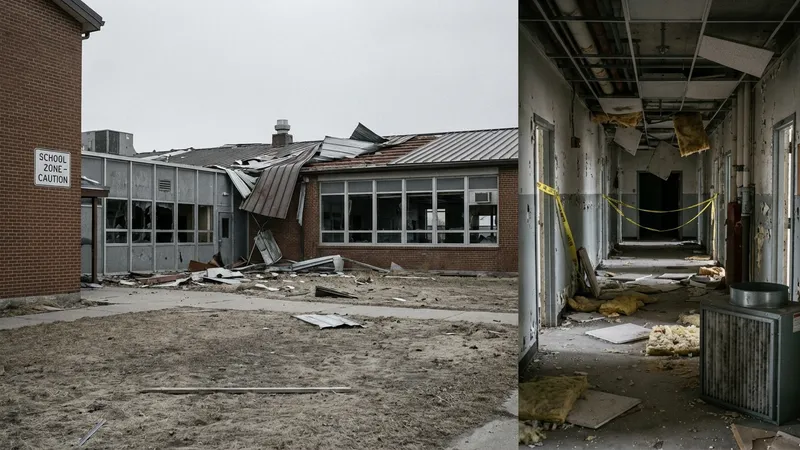
Federal environmental officials are investigating asbestos contamination at nearly 15 homes in Park City, Montana, after a powerful December windstorm ripped the roof off a school gymnasium and scattered hazardous insulation across the surrounding neighborhood.
What Happened
The December 17 Windstorm
On December 17, 2025, a severe windstorm with gusts between 60-90 mph struck Park City, Montana. The storm ripped the roof off the school’s gymnasium, sending debris, including vermiculite insulation containing asbestos, across the surrounding residential area.
The contaminated insulation landed in yards, roads, and properties surrounding the school.
Contamination Extent
| Impact | Details |
|---|---|
| Homes affected | Nearly 15 residences |
| Roads contaminated | 3 roads |
| Yards contaminated | 15+ |
| Source material | Vermiculite insulation from gym roof |
The vermiculite insulation, once common in buildings across the United States, has been detected in residential yards throughout the affected area.
Vermiculite insulation, especially that produced before 1990, often contains asbestos fibers. Much of the vermiculite used in U.S. construction came from the Libby, Montana mine, which was contaminated with tremolite asbestos.
EPA Response
Free Cleanup for Homeowners
The Environmental Protection Agency arrived to assess properties and mark contaminated areas with orange flags. The agency will conduct remediation at no cost to homeowners.
The cleanup process includes:
- Scraping contaminated soil and grass: Approximately 3 inches of surface material
- Replacing with clean topsoil
- Reseeding affected areas
Timeline
| Date | Event |
|---|---|
| December 17, 2025 | Windstorm damages school roof |
| January 2026 | EPA arrives, begins assessment |
| TBD | Remediation to be completed |
| Est. 8 weeks | Before students can return |
School Impact
Students Displaced
The roof damage forced students from the building. Many transitioned to remote learning during cleanup and asbestos abatement operations. The superintendent estimates it could take up to eight weeks before all students can safely return.
Alternative learning arrangements have been made while the school undergoes repairs and asbestos remediation.
Health Risks
Asbestos Exposure Concerns
Asbestos, once commonly used in insulation, is known to cause cancer when fibers are inhaled. Diseases linked to asbestos exposure include mesothelioma (cancer of the lung, abdominal, or heart lining), lung cancer (particularly in combination with smoking), and asbestosis (scarring of lung tissue).
Risk Assessment for Residents
| Factor | Assessment |
|---|---|
| Exposure duration | Brief (windstorm event) |
| Fiber release | Likely during storm and initial cleanup |
| Ongoing risk | Low if material undisturbed |
| EPA remediation | Eliminates ongoing risk |
Single, brief exposures carry lower risk than chronic occupational exposure. However, any asbestos exposure adds to lifetime risk.
Most asbestos-related diseases develop after years of repeated occupational exposure. A single brief environmental event, like a windstorm scattering insulation, carries a lower statistical risk. However, any asbestos exposure adds to a person’s cumulative lifetime risk. Diseases linked to asbestos often take 20 to 50 years to appear after the initial exposure.
The Broader Context
Montana’s Asbestos History
Montana has a tragic history with asbestos contamination:
| Site | Impact |
|---|---|
| Libby, Montana | 400+ deaths, 2,900+ diagnosed with asbestos disease |
| Vermiculite products | Distributed nationwide from Libby mine |
| Legacy insulation | Present in buildings across the state |
The Libby mine produced much of the vermiculite insulation used in American construction from the 1920s through 1990. This contaminated material remains in countless buildings.
Schools and Asbestos
Schools built before 1980 commonly contain asbestos in:
- Insulation (walls, ceilings, pipes)
- Floor tiles
- Roofing materials
- Ceiling tiles
Federal law requires schools to inspect for asbestos and maintain management plans, but the material often remains in place until disturbed, as happened in Park City.
EPA Remediation Process
How Cleanup Works
The EPA’s remediation approach in Park City follows established protocols for vermiculite asbestos contamination. Crews scrape approximately 3 inches of contaminated surface soil and grass from affected yards, then replace it with clean topsoil and reseed. The agency has marked contaminated areas with orange flags to identify zones where work is needed.
All remediation is being conducted at no cost to homeowners. The EPA has used similar methods at hundreds of vermiculite-contaminated sites across the country, including the decades-long Superfund cleanup in Libby, Montana.
Timeline and Scope
The agency began its assessment in January 2026 after identifying vermiculite debris in residential yards, on roads, and on other properties near the school. Full remediation timelines have not been announced, though the school’s own asbestos abatement is expected to take up to eight weeks.
Related Reading
Reader Q&A
Frequently Asked Questions
How did asbestos get into a Montana school?
Vermiculite insulation containing asbestos was common in buildings constructed before 1990. Much of it came from the contaminated Libby, Montana mine, which produced an estimated 80% of the world’s vermiculite supply. A December 2025 windstorm with 60-90 mph gusts damaged the Park City school gym roof, scattering the insulation across the surrounding neighborhood.
Is the contamination dangerous to residents?
The EPA is conducting free cleanup for affected properties. Single brief exposures carry lower risk than chronic occupational exposure, though any asbestos exposure adds to a person’s cumulative lifetime risk. Remediation involves scraping approximately 3 inches of contaminated soil and replacing it with clean topsoil.
How many properties were affected?
Nearly 15 homes and 3 roads had vermiculite insulation debris after the windstorm. Students were displaced for up to 8 weeks while the school underwent repairs and asbestos abatement.
What is the connection between Libby, Montana and asbestos?
The Libby mine produced most of the vermiculite insulation used in U.S. construction from the 1920s through 1990. The ore was contaminated with tremolite asbestos. Over 400 people have died from asbestos-related diseases in Libby alone, and the EPA declared it a Public Health Emergency in 2009.
How much does an asbestos course cost?
Asbestos training course costs vary by provider, location, course type (initial or refresher), and discipline (worker, supervisor, etc.). Online refresher courses range from $45 for 2-hour OSHA Asbestos Awareness to $165 for 8-hour AHERA Contractor/Supervisor , while in-person initial courses include $550 for Asbestos Worker and $700 for Supervisor in MD/DC/VA. State-specific fees add costs, such as Pennsylvania’s $2,582 accreditation per course or $38-$150 worker/supervisor certifications effective November 2025 , and New Jersey’s $500 biennial agency application per discipline.
What qualifications do you need for asbestos removal?
Qualifications for asbestos removal vary by country and jurisdiction. In the UK, licensed work often requires RSPH Level 2 NVQ Diploma in Removal of Hazardous Waste (Construction) – Licensed Asbestos, typically following three days of UKATA-accredited training, though training certificates do not legally prove competency. In the US, nearly every state mandates certification through EPA-accredited courses (2-5 days) and exams (minimum 70% pass rate) for roles like worker, supervisor, inspector, or project manager, with prerequisites including education, experience, or professional licenses such as for engineers. State-specific rules apply, such as Indiana requiring high school equivalency or experience for inspectors and supervisors. People with mesothelioma exposure histories should note these controls aim to limit fiber release during abatement.
Is asbestos still in schools?
Yes, asbestos remains in many U.S. schools, particularly older buildings, where it is managed in place rather than removed unless damaged or disturbed. The Asbestos Hazard Emergency Response Act (AHERA) of 1986 requires public and non-profit private schools to inspect for asbestos every three years, develop management plans, and prevent fiber release through repair or sealing. Removal is not mandated for intact materials, as it can release fibers, so schools prioritize regular inspections and maintenance to minimize risks. This approach stems from EPA findings that exposure in schools poses a significant health hazard, affecting millions of students and staff historically. People with mesothelioma linked to school exposure have pursued claims, often tracing fibers to building materials like tiles and insulation.
How to become certified to test for asbestos?
To become certified to test for asbestos, people seeking certification as asbestos inspectors must complete an EPA- or state-approved training course, typically 3 to 5 days long, covering asbestos identification, health effects, sampling protocols, and building inspections. They must then pass an exam with a score of at least 70% to receive a course completion certificate. Certification requires applying to the relevant state agency with the certificate, application fee, photo, employment details, and sometimes prerequisites like prior experience or a physical exam; requirements vary by state, and multi-state work often needs separate certifications. Certifications generally last one year and require annual refreshers.