Asbestos in American Schools: What the 2026 Data Shows
How many U.S. schools still contain asbestos, what AHERA requires, and what parents can demand from their districts.

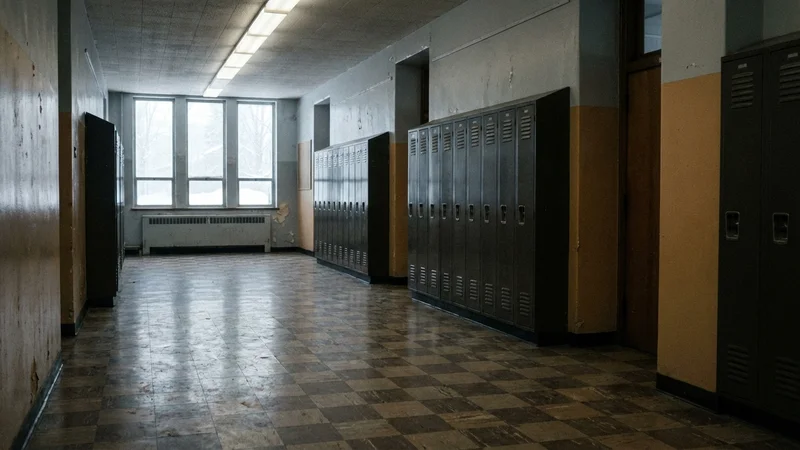
When 17 families at the University of Montana reached an $850,000 settlement in December 2025 over asbestos exposure at a campus daycare, the facts were familiar but the timeline was striking. The discovery happened in 2018. The children were toddlers. The families waited seven years for resolution, knowing their children might not develop symptoms for decades more.
The University of Montana daycare is not an outlier. Asbestos remains present in an estimated 107,000 U.S. schools, primarily in buildings constructed during the era when the material was standard in insulation, ceiling tiles, floor coverings, and HVAC systems. A 1986 federal law requires schools to find it, document it, and manage it. How well that law works in practice depends heavily on whether parents know to ask.
How Asbestos Ended Up in Schools
Asbestos was widely used in U.S. construction from the 1930s through the late 1970s. Its fire resistance, insulating properties, and low cost made it the default choice for:
- Thermal insulation on pipes, boilers, and ducts
- Ceiling tiles and spray-applied surfacing
- Floor tiles and mastics
- Roofing materials and siding
- Cement products
School construction boomed in the same decades, particularly in the 1950s and 1960s. Most schools built before 1980 contain some asbestos. Buildings constructed between 1945 and 1975 are considered especially likely to have significant amounts.
The EPA banned most new uses of asbestos in building materials starting in the late 1970s, and a broader federal ban on ongoing chrysotile asbestos uses was finalized in 2024. But these actions addressed future use, not existing buildings. The asbestos installed in schools decades ago is still there, in varying conditions, in tens of thousands of buildings across the country.
What AHERA Requires
The Asbestos Hazard Emergency Response Act (AHERA), passed by Congress in 1986, established federal requirements for managing asbestos in schools. The law applies to public school districts, non-profit private schools, charter schools, and religious schools. Administrative offices like board rooms and superintendent offices also qualify as “school buildings” under the law.
| Requirement | Frequency | Who Must Do It |
|---|---|---|
| Initial asbestos inspection | One-time, by accredited inspector | Every AHERA-covered school |
| Management plan development | Before building is occupied | Accredited management planner |
| Parent and staff notification | Annually | Designated school contact |
| Re-inspection of known ACM | Every 3 years | Accredited inspector |
| Surveillance of known ACM | Every 6 months | Trained school staff |
| Response actions if needed | When ACM is damaged | Accredited abatement workers |
| Plan accessibility to parents | Ongoing, upon request | Designated AHERA contact |
The core philosophy of AHERA is “manage in place.” Intact asbestos-containing materials are generally considered low risk and can be left alone as long as they are not disturbed. The law emphasizes regular monitoring, containment of damaged areas, and removal only when necessary, such as during renovations or when materials become friable (easily crumbled and releasing fibers).
Every school must designate an AHERA contact person who is responsible for the management plan and who handles parent and staff inquiries. This contact information must be publicly available.
Parent and Staff Rights Under AHERA
The law grants specific rights to parents, teachers, and school employees that most families never use.
Any parent, guardian, teacher, or school employee can request to see the school’s asbestos management plan, and the school is required to make it available within a reasonable time. The plan must include locations of asbestos-containing materials (often marked on blueprints), inspection dates, response actions taken, and surveillance records.
Schools must notify parents, teachers, and employees each year that the management plan exists and is available for review. In practice, this is often a line buried in a back-to-school packet. When schools conduct asbestos abatement, cleanup, or other major response actions, they are also required to notify affected parents and staff.
Parents who believe their school is out of compliance can file complaints with state education or environmental agencies. Enforcement varies significantly by state.
Contact the school’s designated AHERA contact person, usually listed in the school handbook or available from the main office. You can request to see the management plan in person or receive a copy. The school cannot charge a fee for reasonable access. If the school does not have a plan or does not respond, contact your state education agency or state environmental department.
Where Compliance Breaks Down
AHERA is a federal law, but enforcement is delegated to states and relies heavily on self-reporting by school districts. Several weak points have emerged over the law’s 40-year history.
State oversight is inconsistent. States vary widely in how aggressively they inspect schools, enforce plan requirements, and respond to complaints. Some states run dedicated asbestos programs. Others rely on federal EPA enforcement, which is stretched thin across the entire country.
Budget pressure drives shortcuts. School districts under financial strain sometimes delay re-inspections, fail to update management plans, or skip staff training. These shortcuts are often invisible until a disturbance event makes them visible.
The highest-risk moments for asbestos exposure in schools occur during construction, renovation, and maintenance work. AHERA requires that these activities follow specific protocols, but contractors occasionally bypass them, unaware of asbestos in the materials they are disturbing.
Management plans written in the 1980s or 1990s may also no longer reflect current conditions. Damaged materials, new construction, or changes in occupancy can invalidate older plans, but updates are not always done on schedule.
The University of Montana case illustrates several of these failure points. Asbestos was initially identified in December 2018 on the second floor of McGill Hall, which housed a childcare center. An area was sealed, but more thorough testing in January 2019 found loose fibers in the HVAC system, on surfaces, on children’s toys, and on tables in both McGill and Craighead Halls. The daycare was relocated the next day, and the university spent $700,000 on remediation.
The 17 families of exposed children sued in May 2020. The settlement was finalized in December 2025 and reported publicly in January 2026. The children, who were toddlers at the time of exposure, are now in middle school. Because asbestos-related diseases have latency periods of 20 to 60 years, whether the exposure will cause illness will not be known for decades.
The Health Stakes
Children may be particularly vulnerable to asbestos exposure. Their lungs are still developing, they breathe at faster rates relative to body size, and they have more years ahead of them for latent diseases to develop.
Mesothelioma, the rarest and most specifically asbestos-linked cancer, has a latency period typically between 20 and 60 years. A child exposed at age 5 may not develop symptoms until their 40s, 50s, or 60s. The 3,000 annual mesothelioma cases currently diagnosed in the United States reflect exposures that occurred decades ago, often in childhood or early adulthood.
There is no medical test that can confirm past asbestos exposure in children or predict who will develop disease. Monitoring consists of regular physical examinations, chest imaging when symptoms arise, and documentation of exposure for future reference.
What Parents Can Do
The practical steps available to parents are limited but meaningful:
-
Request the management plan. Every parent has the right to review their school’s asbestos management plan. Reading it is the fastest way to know what is present in the building, where, and how recently it has been inspected.
-
Ask about recent renovations. Construction, HVAC work, roof repairs, and floor replacements are the highest-risk moments. Ask whether asbestos abatement protocols were followed and whether air testing was done after the work.
-
Monitor for unusual conditions. Water damage, cracked ceiling tiles, exposed insulation, and deterioration of floor tiles can release asbestos fibers from materials that would otherwise be safe. Report these conditions to the school administration.
-
Document exposure concerns. If you believe your child may have been exposed, document the circumstances, keep copies of any communications with the school, and discuss the exposure with your child’s pediatrician. Records become valuable if symptoms emerge years later.
-
Know where to complain. State education agencies and state environmental departments handle AHERA complaints. The EPA regional office for your area can also accept complaints when state enforcement is inadequate.
References
U.S. Environmental Protection Agency. Asbestos and School Buildings.
https://www.epa.gov/asbestos/asbestos-and-school-buildings
U.S. Environmental Protection Agency. Asbestos Hazard Emergency Response Act (AHERA).
https://www.epa.gov/asbestos/asbestos-hazard-emergency-response-act-ahera
U.S. Environmental Protection Agency. EPA Asbestos Laws and Regulations.
https://www.epa.gov/asbestos/asbestos-laws-and-regulations
KPAX News. Settlements in University of Montana daycare asbestos exposure cases.
https://www.kpax.com/news/western-montana-news/settlements-in-um-daycare-asbestos-exposure-cases
Reader Q&A
Frequently Asked Questions
How many schools still have asbestos?
The EPA estimates that approximately 107,000 U.S. schools contain asbestos materials, primarily in buildings constructed before the 1980s. An additional 733,000 public and commercial buildings are estimated to contain asbestos.
Is asbestos in schools always dangerous?
Intact asbestos-containing materials that are in good condition and not disturbed pose low risk. The danger arises when materials are damaged, deteriorated, or disturbed during renovation or maintenance work, releasing fibers into the air. AHERA’s “manage in place” approach is based on this distinction.
Can I see my school's asbestos management plan?
Yes. Under AHERA, any parent, teacher, or school employee has the right to review the school’s management plan. Contact the school’s designated AHERA contact person, usually listed in the school handbook or available from the main office.
What should I do if my school does not have a management plan?
File a complaint with your state education agency or state environmental department. These agencies are responsible for AHERA enforcement in most states. You can also contact the EPA regional office for your area.
How long does it take for mesothelioma to develop after asbestos exposure?
Mesothelioma typically develops 20 to 60 years after asbestos exposure. A child exposed in elementary school may not develop symptoms until middle age or later, which is why long-term monitoring and documentation are important.
Was asbestos banned in the United States?
Most new uses of asbestos in building materials were banned starting in the late 1970s. A broader EPA rule finalized in 2024 banned remaining chrysotile asbestos uses. Neither ban addressed asbestos already installed in existing buildings, which remains present in an estimated 107,000 schools and 733,000 public and commercial buildings.
What are the requirements for schools under AHERA?
The Asbestos Hazard Emergency Response Act (AHERA) requires public school districts and non-profit elementary/secondary schools, including charter and religious-affiliated schools, to inspect buildings for asbestos-containing materials, with reinspections every three years by accredited inspectors. Schools must develop, maintain, and update an asbestos management plan available at each school, conduct periodic visual surveillance of known or suspected asbestos-containing materials every six months, and provide annual written notification to parents, teachers, and employee organizations about the plan and any abatement actions. These measures focus on in-place management to prevent asbestos hazards, with leased or acquired buildings inspected before or soon after use.
What is the 3 5 7 rule for asbestos sampling?
The 3-5-7 rule, from EPA’s Asbestos Hazard Emergency Response Act (AHERA) under 40 CFR 763.86, sets minimum bulk samples for friable surfacing materials (like acoustic ceilings or spray-on fireproofing) in homogeneous areas: 3 samples for <1,000 sq ft, 5 for 1,000-5,000 sq ft, and 7 for >5,000 sq ft. Samples must be randomly distributed, with the area deemed asbestos-containing if ≥1% asbestos by weight in any sample. The EPA Pink Book recommends 9 samples per area for higher confidence, though 3-5-7 is the regulatory minimum. This applies to U.S. inspections; other materials like joint compound require separate protocols, often 3 samples. People with mesothelioma often trace exposure to undetected asbestos in such materials.