Minnesota Mesothelioma by the Numbers
Minnesota mesothelioma statistics: CDC data, the Taconite Workers Health Study on 80 Iron Range cases, and the Conwed Cloquet fiberboard plant cohort.

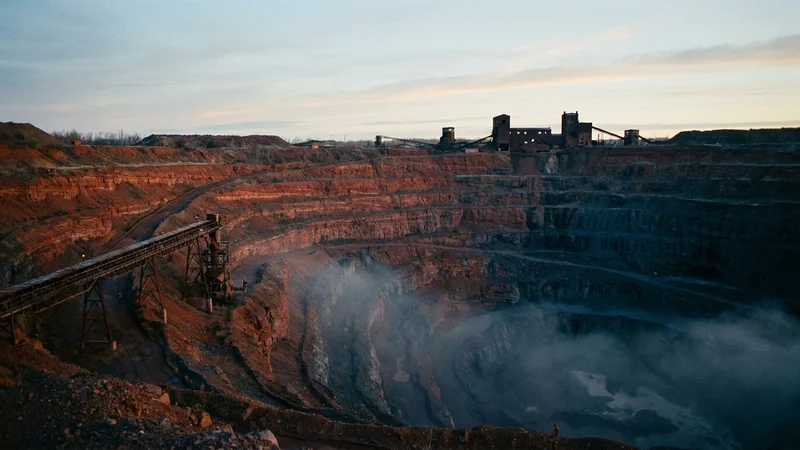
Minnesota’s mesothelioma story runs through two landscapes: the Iron Range in the northeast, where taconite miners extracted low-grade iron ore for decades, and the paper and fiberboard towns around Duluth and Cloquet, where workers made ceiling tiles and insulation with asbestos-containing materials.
According to the Minnesota Taconite Workers Health Study, a long-running research program funded by the Minnesota Legislature, mesothelioma has appeared at roughly three times the expected rate among workers at Iron Range taconite operations compared with the general Minnesota population. A December 2025 verdict of $65.5 million against Johnson & Johnson in a Ramsey County talc case pushed the state’s litigation into national news, but the underlying epidemiology was built decades earlier on cohort studies of miners and mill workers.
What the Data Show
Minnesota’s overall mesothelioma mortality rate sits close to the national figure of roughly 1 per 100,000. In 2021, CDC data recorded approximately 69 new mesothelioma cases in the state against a population of 5.71 million, an incidence of roughly 1.0 per 100,000.
The state stands out in one subgroup. A 2022 Morbidity and Mortality Weekly Report from the CDC identified seven states, including Minnesota, where the age-adjusted mesothelioma death rate for women aged 25 and older exceeded 6 per million between 1999 and 2020. The other six were Louisiana, Maine, Montana, Oregon, Washington, and neighboring Wisconsin.
| Metric | Minnesota | Context |
|---|---|---|
| Incidence rate (2021) | ~1.0 per 100,000 | National avg ~0.8-1.0 per 100K |
| New cases (2021) | ~69 | CDC state-level data |
| Women age 25+ death rate (1999-2020) | >6 per million (top 7 states) | US avg 4.59 per million |
| Taconite cohort size | 68,737 iron-ore miners | 2016 NIOSH case-control |
| Mesothelioma cases in 2016 NIOSH study | 80 (57 with taconite work) | Minnesota Cancer Surveillance System |
| Personal injury SOL | 6 years from discovery | Longer than most states |
The Iron Range and the Taconite Workers Health Study
The Iron Range stretches across northeastern Minnesota through towns like Hibbing, Virginia, Eveleth, and Silver Bay. Reserve Mining Company’s taconite operation at Silver Bay and sister plants across the range employed tens of thousands of workers through the second half of the 20th century.
In 2008, the Minnesota Legislature funded the Taconite Workers Health Study, a collaboration among the Minnesota Department of Health, the University of Minnesota, and the National Institute for Occupational Safety and Health (NIOSH).
2016 Case-Control Study
The 2016 NIOSH case-control study analyzed 80 mesothelioma cases, all male, drawn from a cohort of 68,737 taconite and hematite miners identified through the Minnesota Cancer Surveillance System and death certificates. Of the 80 cases, 57 had worked in taconite. The study compared them with 315 controls drawn from the same cohort.
The findings:
- Mesothelioma risk rose with taconite employment duration (rate ratio 1.03 per year worked, 95% confidence interval 1.00 to 1.06).
- Risk also rose with cumulative exposure to NIOSH-defined elongate mineral particles longer than 5 microns (rate ratio 1.10 per elongate-mineral-particle-per-cubic-centimeter-year).
- No elevated risk appeared among workers limited to hematite mining.
- Models adjusted for commercial asbestos exposure, but the study could not fully exclude commercial asbestos as a contributor.
2024 Follow-Up Study
A 2024 extension of the study analyzed 104 mesothelioma cases, including 71 taconite workers, against 410 controls. It confirmed the earlier finding. Risk rose with taconite years (rate ratio 1.02 per year, 95% CI 1.00 to 1.05) and with NIOSH elongate mineral particle exposure (rate ratio 1.20 per particle-per-cubic-centimeter-year). Cases showed higher median taconite years and more exposure in Zone 2, which covers Hibbing, Virginia, Eveleth, and Silver Bay.
The fibers in taconite differ from commercial asbestos. They are naturally occurring elongate mineral particles released during taconite processing. The studies compare them structurally with amphibole asbestos and analyze their association with mesothelioma risk in workers. The evidence continues to accumulate.
Conwed Corporation and the Cloquet Fiberboard Plant
Conwed Corporation operated a fiberboard manufacturing plant in Cloquet, Minnesota, roughly 20 miles west of Duluth. Between 1958 and 1974, the plant used asbestos in the production of Lo-Tone ceiling tiles, which were installed in commercial and residential buildings across the United States.
In 1988, the Minnesota Department of Health screened 1,101 former Conwed workers along with 451 of their spouses. The screening found:
- 28% of workers (roughly 308 individuals) had chest X-ray abnormalities consistent with asbestos exposure, as judged by at least one expert radiologist.
- About 5% of spouses showed abnormalities, indicating household or take-home exposure at a lower level than direct workplace contact.
A 1993 follow-up publication summarized a broader state-sponsored program that screened approximately 4,500 asbestos-exposed workers in Minnesota. The Conwed cohort was the largest single facility within that program.
A 2007 Minnesota Department of Health update, prepared in collaboration with NIOSH, analyzed 58 mesothelioma cases among Iron Range taconite workers. Only three of the 58 had worked at Conwed, which ruled out the Cloquet plant as the primary cause of the taconite cohort’s mesothelioma burden.
Duluth, Superior, and Regional Shipyards
The Duluth-Superior harbor at the western end of Lake Superior supported shipbuilding and ship repair for Great Lakes freighters and ocean-going vessels transiting the St. Lawrence Seaway. Workers at Fraser Shipyards in Superior, Wisconsin, and at smaller Duluth facilities handled insulation, gaskets, pipe covering, and engine room components that contained asbestos.
In 2016, OSHA cited Fraser Shipyards for workplace hazards during the retrofit of a 690-foot Great Lakes vessel. The proposed penalties totaled roughly $1.4 million for lead and other violations, including 14 willful egregious health citations for lead levels more than 20 times the occupational limit. Asbestos hazards were among the issues identified during the work. The citations drew national attention to conditions in inland shipyards.
Who Is Most at Risk
- Taconite miners from Iron Range operations at Hibbing, Virginia, Eveleth, and Silver Bay
- Conwed Cloquet workers and their household members from the 1958 to 1974 production period
- Paper mill workers at facilities in Cloquet, International Falls, and Sartell
- Shipyard workers at Fraser and other Duluth-Superior harbor facilities
- Power plant workers at Northern States Power (now Xcel Energy) generating stations including Allen S. King and Sherco
- Minneapolis-Saint Paul construction tradespeople, including insulators, pipefitters, and electricians who worked in pre-1980 buildings
- 3M production workers at Minneapolis-Saint Paul manufacturing facilities
Statute of Limitations
Minnesota gives mesothelioma plaintiffs six years from the date of discovery under Minnesota Statute 541.05. That is longer than the two-year deadline in Pennsylvania or Wisconsin’s three-year window. Wrongful death claims must be filed within three years under Minnesota Statute 541.07. The discovery rule starts the clock at diagnosis or at the point when a person reasonably should have connected the illness to asbestos, not at the date of exposure.
The Minnesota Supreme Court applied the six-year personal injury limit in Palmer v. Norlift (2020), holding that a January 2012 diagnosis linking mesothelioma to asbestos started the clock and that a 2018 filing fell outside the window.
Six years for personal injury claims from the date of discovery, and three years for wrongful death claims. Minnesota’s relatively long window reflects the latency of mesothelioma and the fact that many workers do not learn of their diagnosis until decades after exposure.
Legal Options for Minnesota Workers
Minnesota’s asbestos trust fund claims matter most to taconite miners, fiberboard workers, and construction tradespeople whose exposure sources trace back to bankrupt manufacturers. Minnesota verdicts and settlements reflect the state’s mix of occupational mining exposure and consumer talc litigation, including the record $65.5 million Ramsey County verdict against Johnson & Johnson in December 2025.
References
Centers for Disease Control and Prevention. CDC USCS Mesothelioma Report.
https://www.cdc.gov/united-states-cancer-statistics/publications/mesothelioma.html
Centers for Disease Control and Prevention. CDC WONDER Mortality Database.
https://wonder.cdc.gov/
National Institute for Occupational Safety and Health. NIOSH Taconite Workers Health Study Report.
https://stacks.cdc.gov/view/cdc/222715
PMC / NIOSH. Case-Control Study of Mesothelioma in Minnesota Taconite Workers (2024 follow-up).
https://pmc.ncbi.nlm.nih.gov/articles/PMC11941827/
Minnesota Department of Health. Minnesota Department of Health Conwed Cloquet Fact Sheet.
https://www.health.state.mn.us/communities/occhealth/documents/conwedfact.pdf
University of Minnesota. Taconite Workers Health Study (University of Minnesota).
http://taconiteworkers.umn.edu/about/mesothelioma.html
CDC MMWR. MMWR: Mesothelioma Mortality Among Women, 1999-2020.
https://www.cdc.gov/mmwr/volumes/71/wr/mm7119a1.htm
Reader Q&A
Frequently Asked Questions
Is taconite the same as asbestos?
No. Taconite is a low-grade iron ore. The health concern involves elongate mineral particles released during taconite processing. Some of these particles resemble amphibole asbestos in size and shape. The Minnesota Taconite Workers Health Study found that cumulative exposure to NIOSH-defined elongate mineral particles was associated with mesothelioma risk among Iron Range miners.
How many mesothelioma cases came from the Conwed Cloquet plant?
The 1988 Minnesota Department of Health screening examined 1,101 former workers and found 28% had X-ray abnormalities consistent with asbestos exposure. A 2007 analysis of 58 mesothelioma cases in northeastern Minnesota taconite workers found that only three had worked at Conwed, indicating the plant’s mesothelioma burden accrued within its own workforce rather than the broader Iron Range cohort.
Why is Minnesota in the top seven states for women's mesothelioma deaths?
A 2022 CDC report identified seven states, including Minnesota, where the age-adjusted mesothelioma death rate for women aged 25 and older exceeded 6 per million between 1999 and 2020. Researchers have not isolated a single cause, but household exposure from workers in mining, fiberboard, and construction is one hypothesis consistent with the 5% abnormality rate among Conwed workers’ spouses.
What is the statute of limitations for mesothelioma in Minnesota?
Minnesota gives mesothelioma plaintiffs six years from the date of discovery under Minnesota Statute 541.05, and three years from the date of death for wrongful death claims under Minnesota Statute 541.07. The discovery rule starts the clock at diagnosis or when the person reasonably should have linked the illness to asbestos.
Do they still mine taconite in Minnesota?
Yes, taconite mining continues on Minnesota’s Mesabi Iron Range, with active operations at sites like United Taconite near Eveleth and Northshore Mining’s Peter Mitchell Mine near Babbitt. Cleveland-Cliffs owns and operates these facilities, where open-pit mining extracts taconite, processes it into iron ore pellets via crushing, magnetic separation, and pelletizing, then ships them by rail to ports like Duluth. A revived taconite mine, delayed for years, began producing pellets by late 2025, sustaining the industry’s output of over 85% of U.S. iron ore from the region.
Is asbestos found in iron ore?
Asbestos occurs naturally in some iron ore deposits, such as taconite mines in Minnesota’s Iron Range, where workers face elevated mesothelioma rates. twice the general population and three times Minnesota’s average. A University of Minnesota study found each year in taconite mining raised mesothelioma risk by 3%. Grunerite, an asbestiform mineral, has been identified in iron formations at proposed Wisconsin iron ore sites. Similar contamination appeared at Rio Tinto’s West Angelas iron ore mine in Australia. Most U.S. miners face low risk, but naturally occurring asbestos in ore or rock poses hazards when disturbed.
What rare earth mineral deposits are in Minnesota?
Cleveland-Cliffs identified rare earth mineralizations in geological surveys of ore bodies and tailings basins at two of its Iron Range mines in Minnesota, including fully owned sites like Northshore, United Taconite, or the idled Minorca Mine, though specific locations remain undisclosed as development is in early stages. The Mesabi Purchase Area, underlain by granitic rocks of the Giants Range Batholith, shows low to moderate potential for spatially limited rare earth element (REE) deposits, currently under investigation by the Natural Resources Research Institute. Projects like NewRange (formerly PolyMet/NorthMet) on the Iron Range have explored REE potential west of Lake Superior, but face environmental and permitting challenges delaying commercial viability. No sites have reached production as of 2025.
What towns are on the Iron Range in Minnesota?
Minnesota’s Iron Range encompasses four major iron deposits: the Mesabi Range (primarily in Itasca and St. Louis counties), Vermilion Range (St. Louis and Lake counties), Gunflint Range (northern Cook County), and Cuyuna Range (Crow Wing County). Key towns include Hibbing (pop. 16,361, home to the Hull-Rust-Mahoning Open Pit Iron Mine), Virginia (pop. ~8,500), Eveleth (pop. 3,718), Ely (pop. 3,460), Grand Rapids (pop. 10,869), Mountain Iron (pop. 2,869), Biwabik (pop. ~1,000-1,475), Aurora (pop. ~1,600-1,853), Gilbert (pop. 1,799), Chisholm, Hoyt Lakes, Babbitt (pop. 1,475), Crosby (pop. 2,386), and Tower (pop. ~500). Lost mining “locations” like Sparta, Taconite Harbor, Genoa, Penobscot, Cooley, Coleraine, Marble, and Taconite also dotted the region historically. Nearby Duluth (pop. 86,265) serves as a major ore shipping hub.