Ironworkers and Asbestos Exposure Risks
Ironworkers faced asbestos exposure from fireproofing spray, welding blankets, and structural insulation. Learn about exposure sources and legal options.

Overview
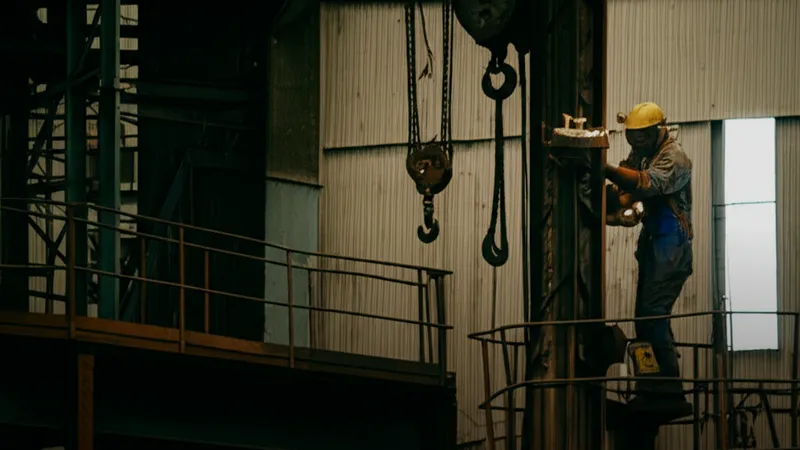
Ironworkers, tradespeople who erect structural steel, install reinforcing bars, and work on metal construction, faced significant asbestos exposure from fireproofing materials, welding products, and structural insulation. Asbestos spray-on fireproofing was standard for protecting steel structures from fire.
Asbestos in Ironwork
| Product | Application | Exposure Level |
|---|---|---|
| Spray-on fireproofing | Structural steel protection | Very High |
| Welding blankets | Fire protection during welding | High |
| Fireproof coatings | Steel beam protection | High |
| Deck insulation | Metal deck assemblies | Moderate |
How Ironworkers Were Exposed
Fireproofing Exposure
Asbestos spray-on fireproofing was applied to structural steel:
- Ironworkers worked while fireproofing was being applied nearby
- Overspray contaminated entire work areas
- Fibers remained airborne in enclosed buildings
- Touch-up work disturbed dried fireproofing
Welding Operations
Ironworkers performed extensive welding:
- Used asbestos welding blankets for fire protection
- Cut through steel with asbestos coatings
- Worked with asbestos heat shields
Even ironworkers who didn’t directly handle asbestos products were heavily exposed when spray fireproofing was being applied to steel structures they were erecting.
Work Environments
Ironworkers faced exposure on high-rise office buildings and hotels, in industrial factories and power plants, in shipyards erecting ship structural work, on bridges and infrastructure projects, and during renovation and demolition. Between 1940 and 1980, crews erecting commercial high-rises in New York, Illinois, and California worked directly underneath spray crews applying W.R. Grace Monokote fireproofing, which coated every incoming beam with asbestos.
Related Occupations
Ironworkers worked alongside:
- Welders, Structural welding
- Carpenters, Building construction
- Laborers, General assistance
- Operating engineers, Equipment operation
- Boilermakers, Industrial structures
Related Industries
Health Consequences
Ironworkers face elevated risk of mesothelioma, a cancer of the chest or abdominal lining; asbestosis, a progressive scarring of the lungs; lung cancer, with risk multiplied among smokers; and pleural disease that thickens the lining around the lungs.
The Regulatory Turn
Asbestos was one of the first hazardous air pollutants the EPA ever regulated. The agency identified it as a hazardous pollutant in 1971 and promulgated the asbestos NESHAP in April 1973 under the Clean Air Act, the rule that still governs work practices and emissions when structures carrying old asbestos fireproofing get renovated or come down. The National Cancer Institute counts fireproofing among the core construction uses of asbestos and reports that US consumption peaked at about 803,000 metric tons in 1973, the height of the high-rise era described above. OSHA addresses asbestos in construction through a dedicated standard requiring exposure monitoring and hazard-awareness training, and it states that no level of exposure is safe for any fiber type.
Legal Options
Ironworkers diagnosed with mesothelioma typically pursue several tracks in parallel. Fireproofing and building-material manufacturers including W.R. Grace and Johns Manville established asbestos trust funds through bankruptcy reorganization. Trust claims often run alongside product-liability suits against solvent fireproofing manufacturers, premises-liability claims against building owners, general-contractor liability claims against prime contractors, and workers’ compensation through a former employer.
References
National Cancer Institute. Asbestos Exposure and Cancer Risk.
https://www.cancer.gov/about-cancer/causes-prevention/risk/substances/asbestos/asbestos-fact-sheet
Occupational Safety and Health Administration. Asbestos: Overview, Health Effects, and Standards.
https://www.osha.gov/asbestos
U.S. Environmental Protection Agency. Overview of the Asbestos National Emission Standards for Hazardous Air Pollutants (NESHAP).
https://www.epa.gov/asbestos/overview-asbestos-national-emission-standards-hazardous-air-pollutants-neshap