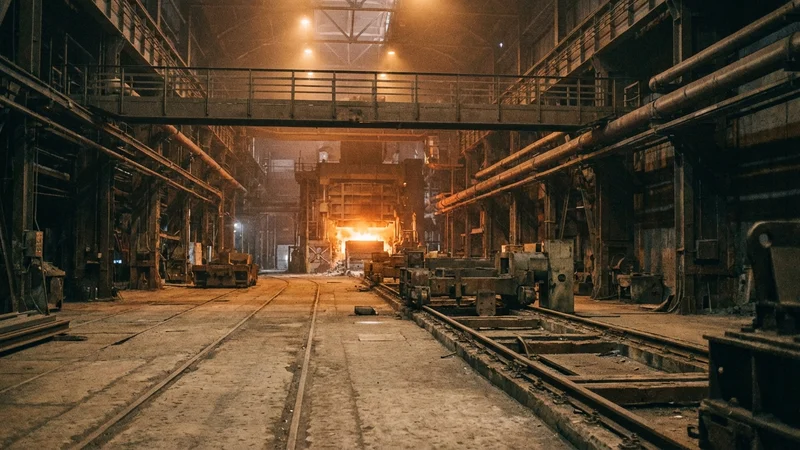
Indiana’s 1,044 mesothelioma deaths between 1999 and 2017 trace to two industrial corridors that defined the state’s economy: the steel mills along Lake Michigan’s southern shore and the auto manufacturing complex that spread across central Indiana.
The workers who poured the steel, assembled the cars, and maintained the power plants are the ones receiving diagnoses now, decades after their last exposure. Asbestos was not a side material in these industries. It was structural, embedded in the insulation, fireproofing, and mechanical components that made production possible.
The Gary Steel Corridor
The stretch of Lake Michigan shoreline from East Chicago through Gary to Portage contained some of the largest steel mills ever built. This corridor was the backbone of American steel production for most of the 20th century.
US Steel Gary Works
Built in 1906, Gary Works grew into the largest integrated steel mill in North America. At its peak in the mid-20th century, the facility employed more than 30,000 workers across coke ovens, blast furnaces, open-hearth furnaces, basic oxygen furnaces, and rolling mills.
Asbestos was used in virtually every phase of steelmaking at Gary Works. The same exposure conditions existed at steel mills in Chicago’s Southeast Side, Cleveland’s Republic Steel and LTV operations, and Pittsburgh’s Bethlehem Steel complex.
The coke ovens that converted coal into coke operated at extreme temperatures and were lined and insulated with asbestos-containing materials. Workers who maintained these ovens cut and replaced insulation regularly. The blast furnaces that smelted iron ore used asbestos insulation on hot blast stoves and surrounding pipework. Cast house workers, stove tenders, and maintenance crews were exposed to airborne fibers during routine operations and relining.
The rolling mills that shaped hot steel into finished products used asbestos in roll neck bearings, gaskets, and heat shields. Operators and maintenance workers handled these components throughout each shift. Steam generation systems that powered the entire complex used asbestos pipe insulation, turbine lagging, and boiler wrapping, so pipefitters and insulators in the powerhouse had some of the most concentrated exposure at the facility.
Inland Steel (East Chicago)
Inland Steel’s East Chicago works was the second major integrated mill in the corridor. Operating from 1901, the facility ran a similar asbestos-intensive process. Inland’s workforce faced the same exposure profile as Gary Works: coke ovens, blast furnaces, and rolling operations all insulated with asbestos.
Bethlehem Steel (Burns Harbor)
Bethlehem Steel opened its Burns Harbor plant in 1964 as one of the last integrated steel mills built in the United States. Despite being newer than Gary Works or Inland Steel, the Burns Harbor facility still used asbestos insulation extensively in its construction and early operations.
Indianapolis Auto Manufacturing
Indianapolis and central Indiana formed the second major exposure corridor. The city’s auto industry dates to the early 1900s, and by mid-century, major manufacturers operated large assembly and parts plants across the metro area.
Assembly Plants
Chrysler operated a major transmission plant in Indianapolis (the former Indiana Army Ammunition Plant site). General Motors ran assembly operations in Indianapolis and Anderson. Ford’s Indianapolis stamping plant contributed to the regional auto supply chain. In all of these facilities, asbestos was used in brake assemblies, clutch components, gaskets, pipe insulation, and building fireproofing.
Parts Suppliers
Central Indiana’s network of auto parts suppliers exposed thousands of additional workers. Companies manufacturing brake pads, clutch facings, and gaskets used asbestos as a friction material and heat shield. Workers who mixed, molded, and machined these components handled raw asbestos on a daily basis. The same auto industry exposure pattern played out across Detroit and southeastern Michigan, where Ford, GM, and Chrysler operated under identical conditions. National data on mesothelioma risk by occupation ranks auto workers among the highest-risk groups.
Studebaker (South Bend)
The Studebaker Corporation operated in South Bend from 1852 to 1963, building everything from wagons to automobiles. The century-long industrial campus used asbestos insulation in its foundry, powerhouse, paint shops, and assembly buildings. Workers exposed during the plant’s final decades are now in the window for mesothelioma diagnosis.
Fort Wayne Manufacturing
Fort Wayne’s industrial base added a third concentration of asbestos exposure. International Harvester (later Navistar) operated truck manufacturing facilities where asbestos insulation and brake components were standard. General Electric’s Fort Wayne motor manufacturing plant and Dana Corporation’s gasket and seal operations also exposed workers to asbestos-containing products.
Power Plants
Coal-fired power plants across Indiana created a separate category of exposure. The state’s reliance on coal power meant dozens of generating stations, each using asbestos insulation on boilers, turbines, steam lines, and electrical equipment.
| Facility | Location | Operator |
|---|---|---|
| Michigan City Generating Station | Michigan City | NIPSCO |
| Bailly Generating Station | Chesterton | NIPSCO |
| Harding Street Station | Indianapolis | IPL/AES Indiana |
| Gallagher Generating Station | New Albany | Duke Energy |
| Cayuga Generating Station | Cayuga | Duke Energy |
| Clifty Creek Power Plant | Madison | AEP/Indiana Michigan Power |
Boilermakers, pipefitters, insulators, and electricians who worked at these plants handled asbestos insulation as part of their regular duties. Contract maintenance crews who traveled between plants faced cumulative exposure from multiple facilities.
Take-Home Exposure
Like workers across the industrial Midwest, Indiana steelworkers and auto workers carried asbestos fibers home on their clothing, hair, and skin. Spouses who laundered contaminated work clothes and children who had contact with exposed family members faced secondhand exposure.
Indiana courts have recognized take-home exposure claims, and families affected by secondhand exposure may have both lawsuit and trust fund options. In January 2026, the Virginia Supreme Court ruled that shipyard employers owe a duty of care to workers’ family members exposed through contaminated clothing, a decision with implications for secondary exposure claims across the industrial Midwest.
If you or a family member worked at a Gary steel mill, Indianapolis auto plant, or Indiana power facility, an experienced mesothelioma attorney can help reconstruct the exposure history. Union records, employment files, and product identification databases can identify which asbestos-containing products were used at specific work sites.
Which Gary steel mills used asbestos?▼
All of the major integrated steel mills in the Gary corridor used asbestos extensively. US Steel Gary Works, Inland Steel in East Chicago, and Bethlehem Steel in Burns Harbor all relied on asbestos insulation for coke ovens, blast furnaces, rolling mills, and powerhouse operations. The material was standard across the steel industry through the 1970s.
What auto plants in Indiana exposed workers to asbestos?▼
Chrysler, General Motors, and Ford all operated plants in the Indianapolis area where asbestos brake pads, clutch facings, gaskets, and insulation were used. The Studebaker complex in South Bend and International Harvester facilities in Fort Wayne also created significant exposure. Parts suppliers across central Indiana exposed additional workers.
Were power plant workers exposed to asbestos in Indiana?▼
Yes. Coal-fired power plants across Indiana, including NIPSCO facilities in the northwest, IPL plants in Indianapolis, and Duke Energy stations in the south, all used asbestos insulation on boilers, turbines, and steam systems. Boilermakers, pipefitters, and maintenance workers were the most heavily exposed.
Can I file a claim if the steel mill or auto plant is closed?▼
Yes. Mesothelioma claims target the manufacturers of asbestos-containing products used at the workplace, not the employer itself. Many of these manufacturers have established bankruptcy trust funds that continue to accept and pay claims.
References
Agency for Toxic Substances and Disease Registry. ATSDR National Asbestos Exposure Map.
https://www.atsdr.cdc.gov/asbestos/sites/national_map/
Centers for Disease Control and Prevention. CDC WONDER Mortality Database.
https://wonder.cdc.gov/
U.S. Environmental Protection Agency. EPA Asbestos Information.
https://www.epa.gov/asbestos