Twice the National Average: Iowa Mesothelioma by the Numbers
Iowa mesothelioma rates are double the US average. CDC data on 525 deaths and the industries driving elevated rates across manufacturing and meatpacking.

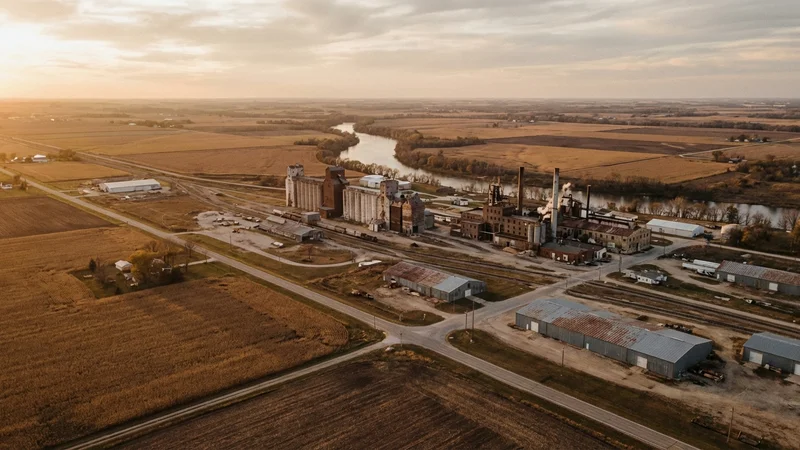
Iowa is not typically associated with the industrial corridors that produced the country’s highest mesothelioma rates. But the numbers show a different story. At 1.06 per 100,000 residents, Iowa’s mesothelioma rate is roughly twice the national average.
The state’s 525 mesothelioma deaths between 1999 and 2017 reflect decades of asbestos exposure across manufacturing plants, meatpacking facilities, and agricultural equipment factories.
The industries that built Iowa’s economy, from Deere and Company in the Quad Cities to the meatpacking plants in Sioux City and Waterloo, all relied on asbestos-containing materials in their operations. Workers who spent careers in these facilities are now receiving diagnoses 30 to 50 years after their last exposure.
State Rankings
For a full comparison of all 50 states, see our mesothelioma rates by state rankings.
| Metric | Iowa | National |
|---|---|---|
| Mesothelioma rate (per 100K) | 1.06 (2x average) | 0.6 |
| Mesothelioma deaths (1999-2017) | 525 | ~30,000 |
| Statute of limitations (PI) | 2 years from diagnosis | Varies by state |
| Key industries | Manufacturing, meatpacking, ag equipment | Varies by state |
County-Level Data
| County | Key City | Primary Industries | Risk Level |
|---|---|---|---|
| Polk | Des Moines | Manufacturing, power generation, construction | High |
| Linn | Cedar Rapids | Cereal processing, manufacturing, utilities | High |
| Scott | Davenport | Agricultural equipment (Deere), heavy manufacturing | High |
| Woodbury | Sioux City | Meatpacking, rail yards | Elevated |
| Black Hawk | Waterloo | Meatpacking (Rath, Tyson), manufacturing | Elevated |
| Dubuque | Dubuque | Manufacturing, river industry | Elevated |
Iowa’s mesothelioma burden is concentrated in its industrial cities. Polk County (Des Moines) leads the state, reflecting the capital city’s role as a hub for manufacturing, power generation, and commercial construction. Linn County (Cedar Rapids) and Scott County (Davenport) follow, driven by cereal processing, agricultural equipment manufacturing, and heavy industry along the Mississippi River.
The meatpacking corridor running through Sioux City and Waterloo adds a dimension unique to Iowa. Meatpacking plants used asbestos insulation in refrigeration systems, steam pipes, and boiler rooms. Workers in these facilities were exposed throughout their careers.
While Iowa’s meatpacking exposure is distinctive, the state’s broader manufacturing profile parallels the patterns seen in Wisconsin’s paper mill corridor and Michigan’s auto manufacturing belt, where sustained industrial asbestos use drove similarly elevated rates.
Where Exposure Happened
Iowa’s asbestos burden traces to three primary sectors.
Manufacturing in Des Moines, Cedar Rapids, and the Quad Cities
Iowa’s manufacturing base, concentrated in Des Moines, Cedar Rapids, and the Quad Cities, used asbestos across production equipment, insulation, and facility infrastructure. The Quad Cities corridor, straddling the Iowa-Illinois border at Davenport and Bettendorf, was home to John Deere operations and a network of heavy manufacturing plants where asbestos insulation, gaskets, and fireproofing were standard.
Meatpacking in Waterloo and Sioux City
Iowa’s meatpacking industry was among the largest in the country. Plants operated by Rath Packing in Waterloo, Iowa Beef Processors in Sioux City, and others used asbestos insulation throughout their refrigeration systems, steam lines, and boiler operations. Maintenance workers who serviced these systems had direct, repeated contact with asbestos-containing materials.
John Deere and agricultural equipment plants
The production of tractors, combines, and farm equipment in Iowa factories involved asbestos brake pads, clutch facings, gaskets, and insulation. Workers at agricultural equipment plants handled these components as part of assembly and maintenance operations.
Who Is Most at Risk
- Manufacturing workers at plants in Des Moines, Cedar Rapids, and the Quad Cities
- Meatpacking workers who maintained refrigeration and steam systems
- Agricultural equipment workers handling brake, clutch, and gasket components
- Pipefitters and insulators in industrial and commercial construction, one of the highest-risk occupational groups nationally
- Boilermakers at power plants and industrial facilities
- Construction tradespeople working in pre-1980 commercial and public buildings
- Military veterans stationed at Iowa bases, who face elevated risk across all service branches
Most Iowa mesothelioma deaths occur in people aged 60 and older, consistent with the 20 to 60-year latency period between exposure and diagnosis.
Iowa has a two-year statute of limitations for personal injury claims, running from the date of diagnosis. Wrongful death claims must also be filed within two years. This is shorter than many neighboring states, making early consultation with an attorney critical for preserving legal options.
Legal Landscape
For an overview of all current treatment options, see the 2026 mesothelioma treatment landscape. Iowa’s asbestos trust fund claims are particularly relevant for manufacturing and meatpacking workers, who were exposed to products from multiple manufacturers throughout their careers. The companies that manufactured asbestos-containing insulation, gaskets, and industrial components have established bankruptcy trusts that still accept claims.
Verdicts and settlements in Iowa reflect the state’s industrial profile, with cases tied to manufacturing, meatpacking, and agricultural equipment exposure. The Iowa Supreme Court has upheld significant verdicts, including a $6.5 million judgment.
References
Centers for Disease Control and Prevention. CDC USCS Mesothelioma Report.
https://www.cdc.gov/united-states-cancer-statistics/publications/mesothelioma.html
Centers for Disease Control and Prevention. CDC WONDER Mortality Database.
https://wonder.cdc.gov/
Didier et al. 2025, PMC. Mesothelioma Mortality Trends in the United States.
https://pmc.ncbi.nlm.nih.gov/articles/PMC12005915/
Reader Q&A
Frequently Asked Questions
Why does Iowa have an elevated mesothelioma rate?
Iowa’s manufacturing, meatpacking, and agricultural equipment industries all used asbestos extensively through the 1970s. The combination of these industries across Des Moines, Cedar Rapids, Davenport, and the meatpacking corridor gives the state a rate approximately twice the national average.
What is the statute of limitations for mesothelioma in Iowa?
Iowa has a two-year statute of limitations for personal injury claims, starting from the date of mesothelioma diagnosis. Wrongful death claims must also be filed within two years of the date of death. This is shorter than many neighboring states.
Which Iowa cities have the most cases?
Des Moines, Cedar Rapids, and Davenport have the highest concentrations of mesothelioma cases, reflecting their heavy industry profiles. Sioux City and Waterloo also show elevated rates tied to the meatpacking industry.
Are mesothelioma cases still being diagnosed in Iowa?
Yes. Because mesothelioma has a latency period of 20 to 60 years, people exposed in the 1960s through 1980s are still receiving diagnoses. Iowa’s rate remains approximately twice the national average despite the decline of some industries that caused the exposure.
Were meatpacking workers exposed to asbestos?
Yes. Meatpacking plants used asbestos insulation in refrigeration systems, steam pipes, and boiler rooms. Maintenance workers who serviced these systems had the highest exposure, but production workers in close proximity were also at risk.
What state has the most mesothelioma cases?
California has the highest number of mesothelioma cases among U.S. states, with 6,816 cases reported between 1999 and 2019 according to CDC data. Other sources confirm California leading with over 6,800 cases in the same period , 6,503 cases , and 284 new cases in 2021 alone.
States like Florida, New York, and Pennsylvania follow with 4,894, 4,191, and 4,191 cases, respectively, over 1999-2019. High rates link to historical asbestos use in shipyards, mining, oil refining, and naturally occurring asbestos in California.
What famous person died from mesothelioma?
Steve McQueen, a prominent actor known for films like The Great Escape and The Magnificent Seven, died from pleural mesothelioma in 1980 at age 50. His exposure is linked to U.S. Marine service, shipyard work, and possible movie set insulation.
Other celebrities who died from mesothelioma include musician Warren Zevon (2003), actor Ed Lauter (2013), and NFL player Merlin Olsen. Paleontologist Stephen Jay Gould survived peritoneal mesothelioma for 20 years before dying from unrelated lung cancer in 2002.
How did Steve McQueen get mesothelioma?
Steve McQueen was exposed to asbestos through multiple occupational and military sources over several decades. His primary exposure occurred during his service in the U.S. Marine Corps from 1947 to 1950, when he worked aboard naval ships and in shipyards, including removing asbestos lagging from pipes at Camp Lejeune.
After his military service, he encountered additional asbestos exposure on movie soundstages where insulation contained the mineral, while wearing flame-resistant racing suits made with asbestos, and while working on race car and motorcycle brakes.
McQueen did not develop symptoms until 1978, nearly 30 years after his initial military exposure, reflecting the typical latency period of 20 to 50 years between asbestos exposure and mesothelioma diagnosis. He was diagnosed with pleural mesothelioma in December 1979 and died in November 1980 at age 50.