Manufacturing and Meatpacking: Iowa Asbestos Exposure Legacy
How Des Moines manufacturing, Cedar Rapids industry, and Iowa meatpacking plants exposed generations of workers to asbestos.

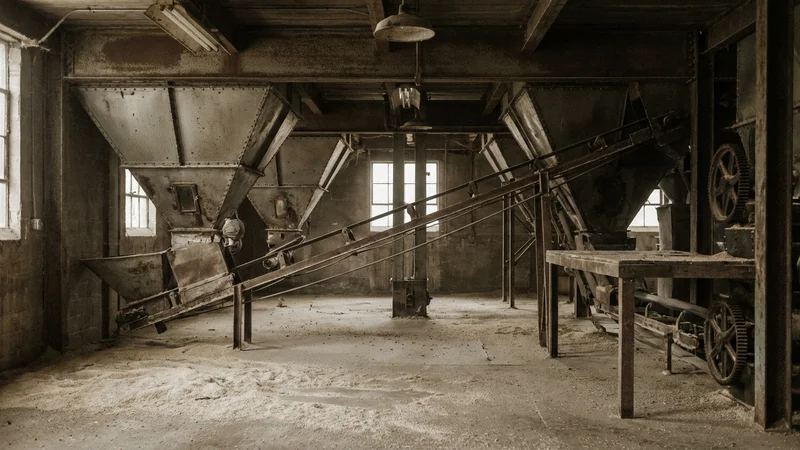
Iowa’s mesothelioma rate of 1.06 per 100,000, roughly twice the national average, traces to industrial corridors that defined the state’s economy for more than a century. The manufacturing hubs of Des Moines and Cedar Rapids, the agricultural equipment plants of the Quad Cities, and the meatpacking facilities that stretched from Sioux City to Waterloo all shared a common feature: asbestos was embedded in their operations.
The workers who ran the production lines, maintained the refrigeration systems, and serviced the boilers are the ones receiving diagnoses now, decades after the plants modernized or closed. Their exposure was not incidental. It was part of the daily routine.
Des Moines Manufacturing Corridor
Des Moines served as Iowa’s manufacturing and commercial center through the 20th century. The city’s industrial base encompassed heavy equipment production, printing, food processing, and a network of power generation facilities. Asbestos was standard in all of them.
Des Moines-area power plants used asbestos insulation on boilers, turbines, and steam distribution systems, exposing pipefitters, insulators, and boilermakers who maintained them throughout their careers. Production plants across Polk County used asbestos in equipment insulation, gaskets, electrical wiring, and fireproofing materials, and maintenance workers and millwrights replaced these components on regular schedules, releasing fibers with every repair. The city’s mid-20th-century building boom layered on another exposure source: commercial construction using asbestos-containing insulation, floor tiles, pipe covering, and fireproofing, installed and later disturbed by construction tradespeople over years or decades.
Cedar Rapids Industrial Base
Cedar Rapids, Iowa’s second-largest city, built its economy on cereal processing, manufacturing, and utilities. Quaker Oats (now PepsiCo) operated one of the largest cereal processing facilities in the world, with extensive steam systems insulated with asbestos. Other manufacturers in the corridor added to the exposure footprint.
Steam-intensive food processing required pipe insulation, boiler lagging, and gaskets throughout the production chain, and workers who maintained these systems in Cedar Rapids plants encountered asbestos as part of routine maintenance. Cedar Rapids-area utilities and power plants used the same asbestos insulation in generation and distribution systems, so workers in those facilities faced exposure similar to power plant workers statewide.
The Quad Cities: Agricultural Equipment
The Quad Cities, straddling the Iowa-Illinois border at Davenport and Bettendorf on the Iowa side, was the center of agricultural equipment manufacturing. John Deere and related suppliers operated large-scale production facilities where asbestos was present in multiple forms. The Illinois side of the corridor shares the same industrial asbestos legacy documented in the Chicago-area steel and manufacturing data.
Tractors, combines, and other agricultural equipment used asbestos brake pads and clutch facings, directly exposing assembly workers and mechanics who installed and serviced these components. Manufacturing equipment in Quad Cities plants also used asbestos gaskets, pipe insulation, and electrical insulation, and maintenance crews handled these materials as part of regular operations. Foundry operations added another hazard: metal casting for equipment parts involved asbestos in heat shielding, protective clothing, and mold insulation, and foundry workers breathed asbestos-laden air in high-temperature environments.
Iowa’s Meatpacking Corridor
Iowa’s meatpacking industry represented a unique exposure pathway. Plants operated by Rath Packing Company in Waterloo, Iowa Beef Processors (IBP) in Sioux City, and other major processors used asbestos throughout their cold-chain and heating infrastructure.
Meatpacking requires constant refrigeration, and the insulation on ammonia lines, cold storage rooms, and freezer systems contained asbestos. Workers who installed and maintained this insulation were exposed daily. While Iowa’s meatpacking exposure is distinctive among states, the underlying industrial pattern of asbestos in steam and insulation systems mirrors what happened in Wisconsin’s Fox Valley paper mills and Michigan’s manufacturing plants.
Steam and boiler systems ran alongside the refrigeration. Processing operations required steam for rendering, cleaning, and cooking, and boiler rooms and steam distribution lines were insulated with asbestos. Boilermakers and pipefitters who maintained these systems had the highest exposure levels. The building infrastructure itself added more: meatpacking plants built before 1980 used asbestos in floor tiles, ceiling materials, wall insulation, and fireproofing, and any renovation or demolition work released fibers into the air.
Take-Home Exposure
Iowa’s manufacturing and meatpacking workers carried asbestos fibers home on their clothing. Spouses who laundered work clothes and children in the household were exposed to the same material that was accumulating in workers’ lungs.
Courts across the Midwest have recognized take-home exposure as a valid basis for claims. In January 2026, the Virginia Supreme Court ruled that shipyard employers owe a duty of care to workers’ family members exposed through contaminated work clothing, strengthening the legal framework for secondary exposure claims nationally. Families affected by secondhand exposure may have both lawsuit and trust fund options.
If you or a family member worked in an Iowa manufacturing plant, meatpacking facility, or agricultural equipment factory, an experienced mesothelioma attorney can help reconstruct the exposure history. Employment records, union documents, and product databases can identify which asbestos-containing products were used at specific facilities.
For legal outcomes from cases involving these exposure sites, see verdicts and settlements.
References
Agency for Toxic Substances and Disease Registry. ATSDR National Asbestos Exposure Map.
https://www.atsdr.cdc.gov/asbestos/sites/national_map/
Centers for Disease Control and Prevention. CDC WONDER Mortality Database.
https://wonder.cdc.gov/
Reader Q&A
Frequently Asked Questions
Which Iowa industries had the highest asbestos exposure?
Manufacturing, meatpacking, and agricultural equipment production were the three primary exposure industries. Power generation and commercial construction also contributed significantly. Workers in maintenance roles, including pipefitters, insulators, and boilermakers, had the heaviest exposure across all industries.
Were meatpacking workers really exposed to asbestos?
Yes. Meatpacking plants relied on extensive refrigeration and steam systems, both of which were insulated with asbestos. Maintenance workers who serviced refrigeration lines, boilers, and steam pipes had direct and repeated exposure. Production workers in proximity to these systems were also at risk.
What jobs at John Deere involved asbestos exposure?
Workers at Deere and Company plants in the Quad Cities encountered asbestos in brake pads, clutch facings, gaskets, pipe insulation, and foundry heat shielding. Assembly workers, mechanics, maintenance crews, and foundry workers all had potential exposure.
Can I file a claim if the plant is closed?
Yes. Most asbestos claims target the manufacturers of the asbestos-containing products, not the employer. Many of these manufacturers have established bankruptcy trust funds. An attorney can identify which trusts apply based on the specific products used at your workplace.
What is the 3 5 7 rule for asbestos sampling?
The 3-5-7 rule, from EPA’s Asbestos Hazard Emergency Response Act (AHERA) under 40 CFR 763.86, sets minimum bulk samples for friable surfacing materials (like acoustic ceilings or spray-on fireproofing) in homogeneous areas: 3 samples for <1,000 sq ft, 5 for 1,000-5,000 sq ft, and 7 for >5,000 sq ft. Samples must be randomly distributed, with the area deemed asbestos-containing if ≥1% asbestos by weight in any sample. The EPA Pink Book recommends 9 samples per area for higher confidence, though 3-5-7 is the regulatory minimum. This applies to U.S. inspections; other materials like joint compound require separate protocols, often 3 samples. People with mesothelioma often trace exposure to undetected asbestos in such materials.
Will I be ok if I breathed in asbestos?
Breathing in asbestos fibers increases the risk of serious diseases, including mesothelioma, lung cancer, and asbestosis, with risks rising based on exposure dose, duration, and factors like smoking. Symptoms often appear 20-40 years after exposure, and no level of exposure is considered completely safe, though short-term or low-level incidents generally carry lower risk than prolonged occupational exposure. Evidence from studies of exposed workers shows most mesotheliomas link to asbestos, but individual outcomes vary widely.
Is asbestos testing required in Iowa?
In Iowa, asbestos testing is required prior to renovation or demolition of public, commercial, and multi-family residential buildings with more than four units, conducted by a state-licensed asbestos building inspector under EPA NESHAP regulations (40 CFR 61, Subpart M). Suspect asbestos-containing materials must be sampled and analyzed in a laboratory; if not tested, they are assumed to contain asbestos. Single-family dwellings owned and managed by the owner are exempt from NESHAP requirements. Notifications to the Iowa Department of Natural Resources are required for demolitions and renovations exceeding thresholds like 160 ft² of surfacing RACM.
How do I know if my house was built with asbestos?
Homes built before 1980 have a higher likelihood of containing asbestos in materials like insulation around pipes and attics, vinyl floor tiles and adhesives, textured popcorn ceilings, roofing shingles, siding, and ductwork. Visual signs include crumbling, frayed, fluffy gray or white insulation, deteriorating drywall, or damaged cement-like materials, especially if brittle or fibrous. Asbestos presence cannot be confirmed without professional testing, as intact materials pose low risk until disturbed. The EPA notes that houses from 1930-1950 often used asbestos insulation.