2,460 Diagnoses: Michigan Mesothelioma by the Numbers
Michigan ranks fourth nationally for mesothelioma rates. CDC data on cases, deaths, and exposure across Wayne, Kent, and Genesee counties.

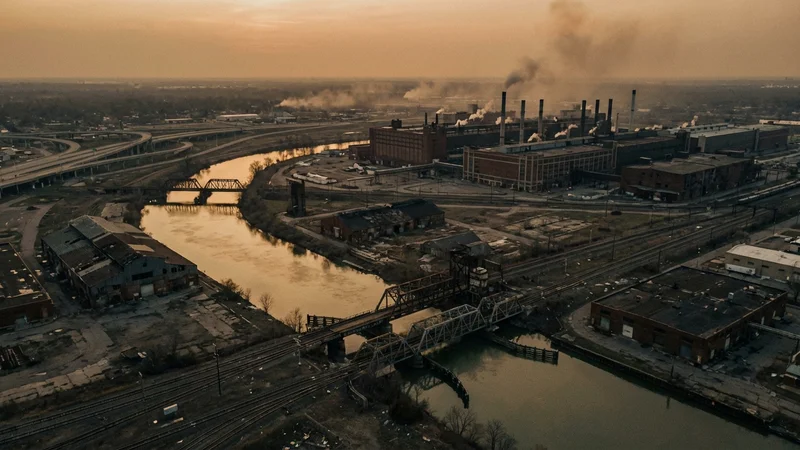
Michigan’s mesothelioma burden traces directly to the industries that built the state’s economy. The auto industry, shipbuilding on the Great Lakes, chemical manufacturing along the Saginaw Valley, and power generation across the state all relied on asbestos for insulation, brake components, gaskets, and fireproofing.
The result: 2,460 diagnosed cases, 1,915 deaths, and a rate that places Michigan consistently among the top five states in the country for mesothelioma. With extensive documented industrial asbestos exposure and 3,many known job sites, the state’s asbestos footprint extends into virtually every industrial community.
State Rankings
For a full comparison of all 50 states, see our mesothelioma rates by state rankings.
| Metric | Michigan | National |
|---|---|---|
| Mesothelioma rate (2022) | 1.18 per 100,000 | ~1.0 per 100,000 |
| National rank (rate) | 4th | - |
| Deaths per million annually | 9.3 | ~10 |
| Annual new diagnoses | ~92-100 | ~3,000 |
| Statute of limitations (PI) | 3 years from diagnosis | Varies by state |
| Statute of limitations (WD) | 3 years from death | Varies by state |
Where Exposure Happened
Michigan’s asbestos exposure patterns follow the state’s industrial geography: auto manufacturing in southeastern Michigan, shipbuilding along the Great Lakes, chemical production in the Saginaw Valley, and power generation across the Lower Peninsula.
Auto Manufacturing
Detroit and its suburbs were the center of American automobile production for most of the 20th century. Ford Motor Company’s Rouge Complex in Dearborn, General Motors plants across Flint, Pontiac, and Lansing, and Chrysler facilities in Detroit and Sterling Heights all used asbestos extensively.
Inside these plants, asbestos appeared in brake linings, clutch facings, gaskets, insulation around furnaces and pipes, and fireproofing throughout the buildings themselves. Assembly line workers, maintenance crews, tool and die makers, and millwrights all encountered asbestos-containing materials during routine work. The scale was enormous: the Rouge Complex alone employed more than 100,000 workers at its peak.
Beyond the Big Three, hundreds of parts suppliers across southeastern Michigan manufactured brake pads, clutch components, gaskets, and insulation products containing asbestos. Workers at these smaller facilities faced similar exposure, often without the protective measures that larger companies eventually adopted.
Shipbuilding and Great Lakes Industry
Michigan’s Great Lakes coastline supported a significant shipbuilding and repair industry. Facilities in Bay City, Detroit, Saginaw, and Muskegon built and maintained commercial vessels, military ships, and smaller craft throughout the 20th century. Shipyard exposure patterns in Michigan mirror those documented at the Brooklyn Navy Yard in New York, Jacksonville and Tampa in Florida, and Savannah, Georgia, where the same asbestos insulation products were used in vessel construction.
Asbestos was used extensively in ship construction for insulation, fireproofing, pipe covering, and boiler lagging. Shipyard workers, particularly insulators, pipefitters, and boilermakers, faced concentrated exposure in confined below-deck spaces where ventilation was minimal and fiber concentrations were highest.
Chemical Plants and Heavy Industry
Dow Chemical’s massive Midland complex, chemical manufacturing along the Saginaw River corridor, and paper mills in the Upper Peninsula all used asbestos in their piping systems, insulation, and industrial equipment. Power plants across the state, including facilities operated by Consumers Energy and Detroit Edison, relied on asbestos insulation around boilers, turbines, and steam distribution systems.
County-Level Data
| County | Key Industries | Notable Sites |
|---|---|---|
| Wayne | Auto manufacturing, steel, power generation | Ford Rouge Complex, Chrysler plants, Detroit Edison |
| Kent | Furniture manufacturing, auto parts, construction | Grand Rapids industrial district |
| Genesee | Auto manufacturing, foundries | GM Flint Assembly, Buick City complex |
| Oakland | Auto parts, manufacturing | Pontiac Assembly, parts suppliers |
| Saginaw | Auto parts, foundries, chemical | GM Saginaw Steering, chemical corridor |
Wayne County accounts for a disproportionate share of the state’s cases, reflecting the concentration of auto manufacturing, steel production, and power generation in the Detroit metropolitan area. Genesee County (Flint) and Kent County (Grand Rapids) also rank among the highest in the state for asbestos-related disease. Across the border, Ohio’s Cuyahoga County shows a similar pattern, where the concentration of steel and auto manufacturing in Cleveland drives an outsized share of that state’s mesothelioma cases.
Who Is Most at Risk
The occupations with the highest exposure in Michigan reflect the state’s industrial profile:
- Auto workers at Ford, GM, Chrysler, and hundreds of parts suppliers
- Pipefitters and insulators in industrial and commercial construction
- Shipyard workers at Great Lakes shipbuilding facilities
- Boilermakers and power plant workers at utilities across the state
- Tool and die makers handling asbestos-containing brake and clutch components
- Chemical plant workers at Dow Chemical and related facilities
- Construction tradespeople working in pre-1980 buildings
Secondary exposure also affects families. Workers carried asbestos fibers home on clothing, exposing spouses and children to the same material. This pathway is particularly well documented among auto worker families in Wayne and Genesee counties. A Virginia Supreme Court ruling in January 2026 affirming a duty of care for shipyard take-home exposure has strengthened the legal basis for similar claims across the country, including in Michigan.
Michigan has a three-year statute of limitations for personal injury claims, running from the date of diagnosis. Wrongful death claims must be filed within three years of death. It’s longer than some neighboring states, and it runs from diagnosis. Knowing how Michigan’s deadline applies to a specific case, and keeping exposure records available, helps a family understand its options and decide on its own timeline.
Legal Landscape
For an overview of all current treatment options, see the 2026 mesothelioma treatment landscape. Michigan courts have handled mesothelioma cases involving auto manufacturers, shipbuilders, and asbestos product companies. Recent results include a $2.9 million Detroit settlement, a $3 million construction exposure verdict, and a $1.4 million mesothelioma case award.
Michigan law allows claims against both solvent companies and bankrupt defendants through asbestos trust funds. An experienced mesothelioma attorney can identify all applicable trusts based on a worker’s employment history and the products used at their specific jobsites.
References
Centers for Disease Control and Prevention. CDC USCS Mesothelioma Report.
https://www.cdc.gov/united-states-cancer-statistics/publications/mesothelioma.html
Centers for Disease Control and Prevention. CDC WONDER Multiple Cause of Death 1999-2020 (ICD-10 C45, Michigan).
https://wonder.cdc.gov/mcd-icd10.html
Didier et al. 2025, PMC. Mesothelioma Mortality Trends in the United States.
https://pmc.ncbi.nlm.nih.gov/articles/PMC12005915/
ATSDR. Agency for Toxic Substances and Disease Registry.
https://www.atsdr.cdc.gov/asbestos/sites/national_map/
Reader Q&A
Frequently Asked Questions
How many people are diagnosed with mesothelioma in Michigan each year?
Michigan records approximately 92 to 100 new mesothelioma diagnoses annually. The state recorded 500 new cases between 2018 and 2022. The rate peaked at 136 cases in 2000 and has gradually declined, though it remains among the highest in the country.
What is the statute of limitations for mesothelioma in Michigan?
Michigan has a three-year statute of limitations for personal injury claims, starting from the date of mesothelioma diagnosis. Wrongful death claims must be filed within three years of the date of death.
Which Michigan counties have the most mesothelioma cases?
Wayne County (Detroit) leads the state by a significant margin, followed by Kent County (Grand Rapids), Genesee County (Flint), Oakland County, and Saginaw County. Wayne County’s concentration of auto plants, steel mills, and power generation facilities drives most of the state’s cases.
Why does Michigan rank so high for mesothelioma?
Michigan was the center of American auto manufacturing for most of the 20th century. Ford, GM, and Chrysler, along with hundreds of parts suppliers, used asbestos in brake linings, clutch facings, gaskets, insulation, and fireproofing. Shipbuilding, chemical manufacturing, and power generation added further exposure across the state.
Can family members of Michigan workers file claims?
Yes. Michigan courts recognize take-home exposure claims, where family members developed mesothelioma from asbestos fibers carried home on workers’ clothing. This pathway is particularly well documented among families of auto workers in the Detroit metropolitan area.
Who removes asbestos in Detroit Michigan?
BBB lists over 113 asbestos removal businesses near Detroit, MI, including Diamond Industrial Services in Dearborn and Environmental Professionals, Inc. in Dearborn Heights. Angi reviews highlight companies like D&D Environmental, Breathe Easier Environmental & Safety, and EnviroGo Asbestos Solutions serving Detroit. Local firms such as Clean Cut Abatement (covering Detroit and Wyandotte), REST Environmental, 3Rock Environmental, and MWV Environmental Services offer licensed asbestos abatement for residential and commercial properties. Michigan EGLE regulates demolition-related asbestos removal statewide.
What is the 3 5 7 rule for asbestos sampling?
The 3-5-7 rule, from EPA’s Asbestos Hazard Emergency Response Act (AHERA) under 40 CFR 763.86, sets minimum bulk samples for friable surfacing materials (like acoustic ceilings or spray-on fireproofing) in homogeneous areas: 3 samples for <1,000 sq ft, 5 for 1,000-5,000 sq ft, and 7 for >5,000 sq ft. Samples must be randomly distributed, with the area deemed asbestos-containing if ≥1% asbestos by weight in any sample. The EPA Pink Book recommends 9 samples per area for higher confidence, though 3-5-7 is the regulatory minimum. This applies to U.S. inspections; other materials like joint compound require separate protocols, often 3 samples. People with mesothelioma often trace exposure to undetected asbestos in such materials.
Can I remove asbestos myself in Michigan?
Michigan law does not prohibit homeowners from removing asbestos from private residences, though contractors performing friable asbestos abatement on another’s property must be licensed by the state’s Asbestos Program, with exemptions for certain licensed trades on small-scale incidental work under 260 linear feet or 160 square feet. DIY removal risks releasing airborne fibers, increasing mesothelioma risk for people with exposure, as materials like insulation or tiles can contaminate homes if disturbed without sealed containment, HEPA filtration, or proper disposal per MIOSHA and EPA guidelines. State guidance recommends testing suspicious materials first and hiring licensed professionals for removal to follow notification rules for projects over 10 linear feet or 15 square feet of friable asbestos.