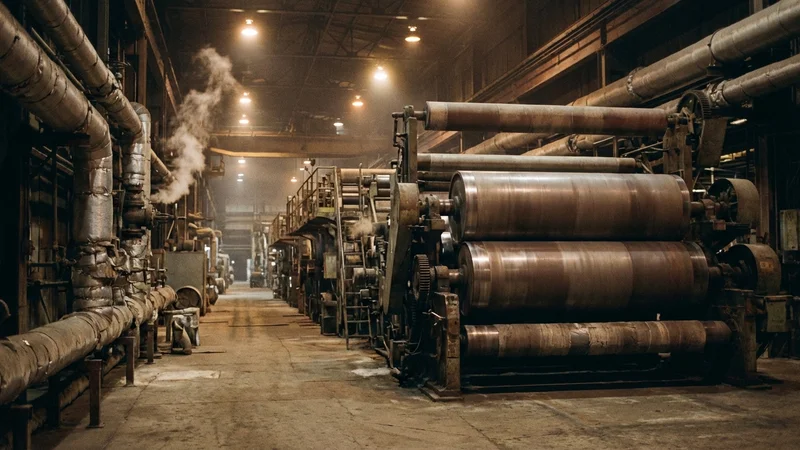
Wisconsin’s position as the state with the highest per capita mesothelioma rate in the country traces to two industrial corridors that defined the state’s economy for more than a century: the Fox River Valley paper mills and Milwaukee’s manufacturing base.
The workers who operated the paper machines, maintained the steam systems, and built the ships are the ones receiving diagnoses now, decades after the mills closed or modernized. Their exposure was not incidental. It was embedded in every shift. For those now facing a diagnosis, the current treatment landscape offers options that were not available when these workers were first exposed.
The Fox River Valley Paper Corridor
The Fox River runs from Lake Winnebago northeast to Green Bay, passing through Appleton, Neenah, Menasha, Kimberly, and Kaukauna. For most of the 20th century, this 30-mile stretch contained more paper mills per square mile than anywhere else in the world.
Companies including Kimberly-Clark, Consolidated Papers, Appleton Papers, and dozens of smaller operations lined the river. The mills produced everything from fine writing paper to tissue to industrial packaging.
Asbestos was integral to the papermaking process. The fabric belts that carried pulp through the machine, known as paper machine felt, contained asbestos fibers for heat resistance and durability. Workers who installed and replaced these felts handled asbestos-containing material directly. Dryer rolls, the heated cylinders that dried the paper sheet, were insulated with asbestos, and maintenance crews who serviced these rolls stripped and replaced insulation as part of routine schedules.
Paper mills run on steam. Every pipe carrying steam from the boiler house to the machine floor was wrapped in asbestos insulation, and pipefitters, insulators, and maintenance workers cut, fit, and replaced this insulation throughout their careers. Pumps, valves, and flanges throughout the mill used asbestos gaskets to withstand heat and pressure, and millwrights replaced these components regularly. Heavy production equipment, including winders, calenders, and conveyors, used asbestos brake pads. Mechanics who serviced this equipment released fibers into the air with every brake job.
Milwaukee Manufacturing
Milwaukee’s industrial base operated independently from the paper corridor but created its own dense web of asbestos exposure. The city’s manufacturing sector encompassed automotive parts, heavy machinery, engines, foundries, and electrical equipment. The auto parts production in Milwaukee paralleled the exposure seen in Detroit’s Big Three assembly plants and Ohio’s Toledo corridor, where brake linings and clutch facings created the same occupational hazards.
Major employers including A.O. Smith, Allis-Chalmers, Briggs and Stratton, and Harnischfeger all operated facilities where asbestos insulation, gaskets, and fireproofing were standard. Workers in these plants handled asbestos-containing materials daily, often without protective equipment or awareness of the risk.
The city’s breweries, including Pabst, Schlitz, and Miller, also used asbestos in their steam systems, refrigeration insulation, and facility infrastructure.
Lake Michigan Shipyards
Shipbuilding on the Great Lakes exposed a smaller but heavily impacted workforce. Manitowoc Shipbuilding Company built submarines and surface vessels during World War II. Sturgeon Bay shipyards constructed Coast Guard cutters and commercial vessels. Milwaukee’s port facilities handled ship repair and maintenance.
Shipyard workers faced some of the most concentrated asbestos exposure of any occupation. Pipe insulation, boiler lagging, fireproofing, gaskets, and electrical insulation all contained asbestos. Workers in enclosed below-deck compartments breathed fiber-laden air throughout their shifts. The same conditions were documented at shipyards in Savannah, Georgia and along the Florida Gulf Coast.
Take-Home Exposure
Like workers in other industrial states, Wisconsin’s paper mill and factory workers carried asbestos fibers home on their clothing. Spouses who laundered work clothes and children who greeted their parents at the door were exposed to the same material that was accumulating in workers’ lungs.
Recent legal cases across the Midwest have recognized take-home exposure as a valid basis for claims. In January 2026, the Virginia Supreme Court affirmed a duty of care for shipyard take-home exposure, a ruling that strengthens the legal foundation for secondary exposure claims nationwide. Families affected by secondhand exposure may have both lawsuit and trust fund options.
If you or a family member worked in a Fox River Valley paper mill, Milwaukee manufacturing plant, or Great Lakes shipyard, an experienced mesothelioma attorney can help reconstruct the exposure history. Employment records, union documents, and product databases can identify which asbestos-containing products were used at specific facilities.
For legal outcomes from cases involving these exposure sites, see verdicts and settlements.
Which paper mills in Wisconsin used asbestos?▼
Virtually all of them. Paper mills across the Fox River Valley, including those operated by Kimberly-Clark, Consolidated Papers, Appleton Papers, and others, used asbestos in paper machine felt, dryer roll insulation, steam pipe covering, gaskets, and brake systems. The material was standard in the industry through the 1970s.
What jobs in paper mills had the highest asbestos exposure?▼
Pipefitters, insulators, and millwrights had the heaviest direct exposure from installing and replacing asbestos insulation and gaskets. Machine operators, maintenance crews, and electricians were also exposed through proximity to asbestos materials during daily operations.
Were Milwaukee breweries asbestos exposure sites?▼
Yes. Major Milwaukee breweries including Pabst, Schlitz, and Miller used asbestos in steam systems, refrigeration insulation, and building infrastructure. Workers who maintained these systems were exposed to asbestos fibers.
Can I file a claim if the paper mill is closed?▼
Yes. Most asbestos claims target the manufacturers of the asbestos-containing products, not the mill itself. Many of these manufacturers have established bankruptcy trust funds. An attorney can identify which trusts apply based on the specific products used at your workplace.
References
Agency for Toxic Substances and Disease Registry. ATSDR National Asbestos Exposure Map.
https://www.atsdr.cdc.gov/asbestos/sites/national_map/
Centers for Disease Control and Prevention. CDC WONDER Mortality Database.
https://wonder.cdc.gov/