Tennessee Asbestos Exposure Legacy
How chemical plants, Oak Ridge nuclear facilities, and manufacturing exposed generations of Tennessee workers to asbestos.

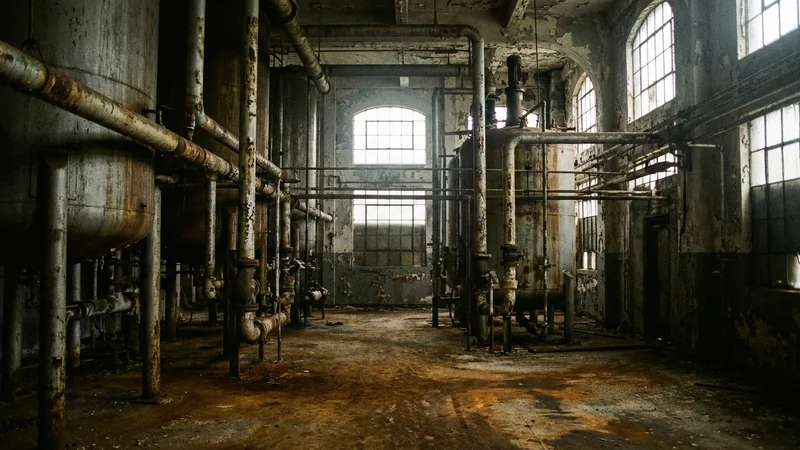
Tennessee’s elevated mesothelioma rate traces to an industrial base that spans the length of the state. From chemical plants in Kingsport to rail yards in Memphis, from Oak Ridge nuclear facilities in the east to manufacturing operations in Nashville and Chattanooga, asbestos was woven into the daily work of hundreds of thousands of Tennesseans.
The workers who maintained the steam systems, insulated the pipes, and operated the production lines are the ones receiving diagnoses now, decades after their last shift.
Nashville and Middle Tennessee
Nashville’s growth as a commercial and manufacturing center created a broad exposure footprint across Davidson County and surrounding areas. The city’s industrial base included machinery manufacturing, printing operations, construction materials production, and food processing, all industries where asbestos was standard in insulation, gaskets, and fireproofing.
Nashville-area factories used asbestos insulation on steam lines, boilers, and processing equipment, and workers who maintained this equipment handled asbestos-containing materials throughout their careers. The city’s building boom from the 1950s through the 1970s layered on another exposure source, with asbestos in insulation, fireproofing, floor tiles, ceiling tiles, and joint compounds exposing construction tradespeople across every specialty. TVA and municipal power facilities in the Nashville area added a third source: asbestos in boiler insulation, turbine lagging, and pipe covering put power plant workers at chronic risk during maintenance and overhaul operations.
Memphis and West Tennessee
Memphis sits at the intersection of the Mississippi River industrial corridor and the national rail network, creating a concentration of exposure sites tied to transportation, chemical manufacturing, and heavy industry.
The Memphis industrial district along the Mississippi River hosted chemical manufacturing and processing operations that used asbestos insulation extensively. Workers in these plants maintained pipe systems, heat exchangers, and reactors insulated with asbestos-containing materials. Memphis has also been a national railroad hub since the 19th century, and rail workers who maintained locomotives, freight cars, and rail infrastructure were exposed to asbestos in brake shoes, gaskets, insulation, and engine components. On the river itself, barge maintenance and port facilities used asbestos in vessel insulation, boiler systems, and dock infrastructure, so workers who serviced river vessels faced exposure similar to shipyard workers.
Oak Ridge Nuclear Complex
The Oak Ridge corridor in Anderson and Roane counties represents one of the most significant federal asbestos exposure clusters in the Southeast. Three major facilities operated here for decades.
Oak Ridge National Laboratory (ORNL), the primary research facility of the Manhattan Project and later the Department of Energy, used asbestos in pipe insulation, laboratory construction, thermal protection systems, and fire barriers throughout its operations. The Y-12 National Security Complex, a weapons production facility that processed uranium and assembled nuclear components, relied on asbestos insulation across its extensive pipe systems and industrial equipment. The K-25 Gaseous Diffusion Plant, the massive uranium enrichment facility, used asbestos in insulation, gaskets, and construction materials across its sprawling production buildings. The K-25 complex is now undergoing decontamination and demolition, creating additional exposure risks for remediation workers.
Workers at all three facilities faced the compounded hazard of both radiation and asbestos exposure. For those navigating a diagnosis, the 2026 treatment landscape covers the full range of current options, from surgery and chemotherapy to immunotherapy combinations and emerging clinical trials. The Energy Employees Occupational Illness Compensation Program Act (EEOICPA) provides federal compensation for qualifying workers, separate from state-level asbestos claims.
Knoxville and East Tennessee
Knoxville’s proximity to Oak Ridge made it a residential base for nuclear facility workers, but the city also had its own industrial exposure profile. Manufacturing, textile production, and marble quarrying operations all used asbestos-containing materials.
The Appalachian region of eastern Tennessee includes zinc mining and smelting operations in the Tri-Cities area (Bristol, Johnson City, and Kingsport) where asbestos was present in smelter insulation and processing equipment. The smelting and manufacturing exposure patterns in eastern Tennessee parallel what occurred in Indiana’s Gary steel corridor, where similar asbestos-containing insulation and refractory products were standard.
Chattanooga and the Tennessee River Valley
Chattanooga’s position on the Tennessee River supported manufacturing, foundry operations, and chemical production. The city’s industrial heritage includes iron and steel production, textile manufacturing, and heavy equipment fabrication, all industries where asbestos was standard.
TVA’s operations are headquartered in Chattanooga, and several power generation facilities in the surrounding area exposed workers to asbestos in boiler systems, turbine insulation, and pipe covering.
Kingsport Chemical Manufacturing
Eastman Chemical Company (formerly Eastman Kodak’s Tennessee operations) has operated in Kingsport since 1920, making it one of the largest chemical manufacturing complexes in the Southeast. The facility’s pipe systems, reactors, and processing equipment used asbestos insulation for decades. The same insulation products that lined Kingsport’s chemical infrastructure were also standard in St. Louis chemical plants, where workers in the Mississippi River industrial corridor faced similar exposure profiles.
Workers who maintained the chemical plant’s infrastructure, including pipefitters, insulators, boilermakers, and maintenance mechanics, had daily contact with asbestos-containing materials.
Take-Home Exposure
Tennessee workers in chemical plants, manufacturing facilities, and nuclear operations carried asbestos fibers home on their clothing, hair, and skin. Spouses who laundered work clothes and children who had contact with contaminated garments were exposed to the same fibers.
Tennessee courts have recognized take-home exposure as a basis for legal claims. In 2026, the Virginia Supreme Court ruled that shipyard employers owed a duty of care to workers’ family members, a decision that may strengthen secondary exposure claims across the Southeast. Families affected by secondhand exposure may have both lawsuit and trust fund options.
If you or a family member worked at an Oak Ridge facility, Tennessee chemical plant, manufacturing operation, or TVA power plant, an experienced mesothelioma attorney can help reconstruct the exposure history. Employment records, DOE databases, union documents, and product identification records can establish which asbestos-containing products were used at specific facilities.
For legal outcomes from cases involving these exposure sites, see verdicts and settlements.
References
Agency for Toxic Substances and Disease Registry. ATSDR National Asbestos Exposure Site Map.
https://www.atsdr.cdc.gov/asbestos/sites/national_map/
Centers for Disease Control and Prevention. CDC WONDER Multiple Cause of Death (ICD-10 C45, Tennessee).
https://wonder.cdc.gov/mcd-icd10.html
U.S. Department of Labor. EEOICPA Site Exposure Matrices (DOL).
https://www.dol.gov/owcp/energy/SECAPortal/SEMCF/
Agency for Toxic Substances and Disease Registry. ATSDR Oak Ridge Reservation Public Health Assessments.
https://www.atsdr.cdc.gov/HAC/oakridge/index.html
U.S. Department of Energy, Office of Environment, Health, Safety and Security. DOE Former Worker Medical Screening Program.
https://www.energy.gov/ehss/former-worker-medical-screening-program-0
U.S. Department of Labor. EEOICPA Program Overview.
https://www.dol.gov/agencies/owcp/energy
Reader Q&A
Frequently Asked Questions
Which industries in Tennessee had the most asbestos exposure?
Chemical manufacturing, Oak Ridge nuclear facilities, general manufacturing, power generation, and construction trades account for the majority of Tennessee’s industrial asbestos exposure. The state’s chemical plants and federal nuclear complex are particularly significant.
Were Oak Ridge nuclear workers exposed to asbestos?
Yes. All three major Oak Ridge facilities (ORNL, Y-12, and K-25) used asbestos extensively in pipe insulation, thermal protection, gaskets, and fire barriers. Workers faced both asbestos and radiation exposure throughout their careers.
Is there federal compensation for Oak Ridge workers?
Yes. The Energy Employees Occupational Illness Compensation Program Act (EEOICPA) provides federal compensation for workers at DOE facilities who developed illnesses from toxic exposures, including asbestos-related diseases. This is separate from state lawsuit and trust fund options.
Were Memphis rail workers exposed to asbestos?
Yes. Memphis has been a major railroad hub since the 19th century. Rail workers who maintained locomotives and rolling stock were exposed to asbestos in brake shoes, gaskets, insulation, and engine components. Rail yard maintenance workers also faced exposure from asbestos-containing infrastructure.
Can I file a claim if the factory or plant is closed?
Yes. Most asbestos claims target the manufacturers of asbestos-containing products, not the employer. Many of these manufacturers have established bankruptcy trust funds. An attorney can identify which trusts apply based on the specific products used at your workplace.
What is the 3 5 7 rule for asbestos sampling?
The 3-5-7 rule, from EPA’s Asbestos Hazard Emergency Response Act (AHERA) under 40 CFR 763.86, sets minimum bulk samples for friable surfacing materials (like acoustic ceilings or spray-on fireproofing) in homogeneous areas: 3 samples for <1,000 sq ft, 5 for 1,000-5,000 sq ft, and 7 for >5,000 sq ft. Samples must be randomly distributed, with the area deemed asbestos-containing if ≥1% asbestos by weight in any sample. The EPA Pink Book recommends 9 samples per area for higher confidence, though 3-5-7 is the regulatory minimum. This applies to U.S. inspections; other materials like joint compound require separate protocols, often 3 samples. People with mesothelioma often trace exposure to undetected asbestos in such materials.
What is the biggest killer of asbestos?
Lung cancer causes the most deaths among asbestos-related diseases worldwide, accounting for the highest rates alongside tracheal cancer. The WHO estimates over 200,000 annual global deaths from occupational asbestos exposure, with more than 70% from work-related cancers predominantly lung cancer, larynx cancer, ovarian cancer, and mesothelioma. In the US, nearly 40,000 people die yearly from asbestos diseases, led by lung cancer and mesothelioma, where asbestos is the only known cause of the latter. All asbestos types increase lung cancer risk, with greater exposure linked to higher incidence. Co-exposure with tobacco smoke substantially elevates this risk.
What are the largest problems in Memphis?
Memphis has experienced significant population decline, losing 35,970 residents since 2010, with 22,185 lost from 2020 to 2024 alone, largely due to poor schools, high crime rates, and poverty affecting 22.6% of the population. Crime remains a top issue despite declines in 2025, including a 24% drop in homicides and 43% in motor vehicle thefts compared to 2024; however, homicides were 58% higher in early 2025 than in early 2019. Urban sprawl from annexation, historical redlining, and disproportionate disinvestment in low-income areas exacerbate these challenges, while climate risks like projected 51 days above 96.9°F annually by 2050 add further pressures.